Remoulade Sauce

Updated Mar 09, 2026
This post may contain affiliate links. Please read our disclosure policy.
A simple, fresh remoulade — mayo base, ketchup, brown mustard, celery for crunch, scallions for bite, fresh parsley, and just enough seasoning to make it interesting. Ten minutes, one bowl, no blender. Serve it with crab cakes, shrimp, sandwiches, or anything fried. Make it an hour ahead if you can — it gets better as it sits.

Remoulade is one of those sauces that sounds fancier than it is. It’s mayo-based, it takes ten minutes, and once you’ve made it you’ll find yourself putting it on everything — crab cakes, fried shrimp, sandwiches, fried fish, grilled vegetables, and things you didn’t expect. It’s the zingier, more interesting cousin of both tartar sauce and plain mayo, and it belongs in your regular rotation.
This version leans into the French origins of the sauce — fresh herbs, celery for actual crunch, clean flavors — rather than going full Louisiana Cajun. The result is brighter and more versatile, and it’s the one I make when I want something that works with seafood and everything else on the table.
What's In This Post?

Remoulade Sauce: The perfect sauce to pair with crab cakes, cooked seafood (especially shrimp!), vegetables, and simply fried foods.
By signing up, you agree to our Privacy Policy.
French vs. Louisiana Remoulade
Two main styles of remoulade exist and they’re genuinely different. The French original is lighter and herb-forward, with a mayo base, mustard, fresh parsley, and sometimes capers or celery. The Louisiana version — which most people think of — is bolder, redder, and spiced with paprika, hot sauce, horseradish, and Cajun seasoning.
This recipe is closer to the French style, adapted with a little Louisiana spirit. If you want to push it toward the Cajun end, the variations section below has you covered.
Variations
- To make it spicier: Add a dash of hot sauce, a pinch of cayenne, or a teaspoon of prepared horseradish. Start small — horseradish in particular can take over fast.
- To make it more Cajun: Add smoked paprika, a little garlic, and Creole mustard instead of brown mustard. This pushes it firmly into Louisiana territory.
- To add more texture: A tablespoon of sweet relish or finely chopped cornichons adds a pickly crunch. This brings it closer to tartar sauce territory, but in a good way.
- To lighten it: Swap half the mayo for Greek yogurt. Tangy, lighter, still works.
Tips
Let it sit. Make the remoulade at least an hour before you serve it — ideally longer. The flavors meld as it sits, and the sauce goes from good to notably better. Overnight in the fridge is ideal.
Chop everything fine. The celery and scallions should be minced small enough that they become part of the sauce rather than chunky bits sitting in it. A mini food processor makes this effortless.
Use fresh herbs only. Dried parsley will not do what fresh parsley does here. The bright color and grassy flavor of fresh herbs is essential.
Taste and adjust before serving. After it’s sat in the fridge, taste it again — you may want more mustard, a little more salt, or a squeeze of lemon. Cold dulls flavors slightly, so what seemed right at room temperature might need a touch more seasoning after chilling.
Both remoulade and tartar sauce are mayonnaise-based sauces but with slightly different flavorings.
The primary difference is that tartar sauce features chopped pickles, giving it a sour and salty flavor, while remoulade sauce is flavored by the ketchup and mustard. Both sauces feature fresh herbs heavily, and both pair very well with seafood and fried foods.
Yes — and you should. The flavors improve significantly as it sits. Make it a few hours ahead at minimum, overnight if possible. It keeps for up to a week in the fridge.
Ingredients
This mayo-based sauce gets its kick from small amounts of brightly flavored ingredients. Dial the amount of the seasonings up and down as you please.
- Mayonnaise – This creamy condiment makes the base for this sauce.
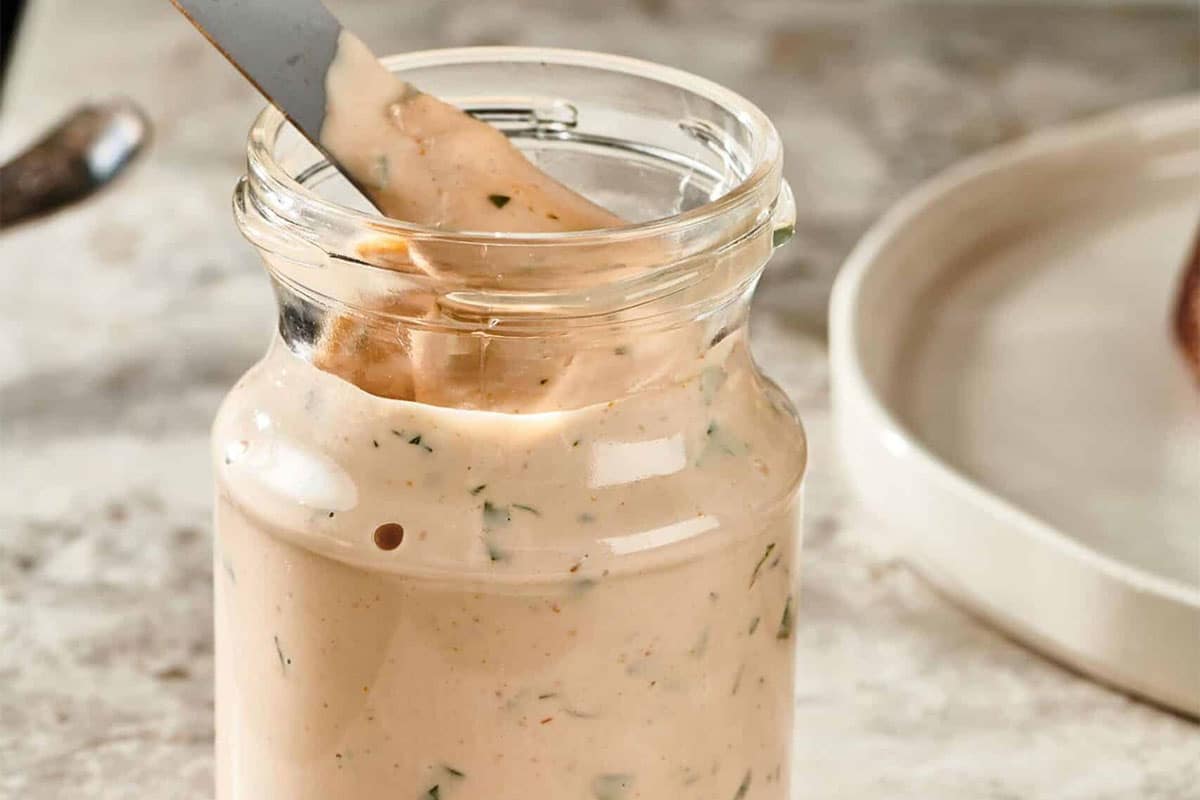
- Ketchup – Adds sweetness and a touch of acidity and gives the remoulade sauce its signature pinkish-orange color.
- Brown mustard – Adds a little spicy kick.
- Celery – Finely chopped celery adds the perfect amount of crunch.
- Parsley – Definitely use fresh herbs here! Fresh parsley provides flavor, color, and texture to the sauce.
- Scallions – Give the sauce a little oniony kick and some nice, interesting texture.
- Salt and pepper – To taste.
How to Make Remoulade Sauce
- Add ingredients: Add the mayonnaise, ketchup, mustard, celery, parsley, and scallions to a medium-sized bowl. Season with salt and pepper.

- Stir: Mix well until blended.

- Serve: Refrigerate until ready to use with your favorite dish.
Storage
Keep in a tightly sealed container in the refrigerator for up to one week. Give it a stir before serving — it may separate slightly as it sits. Do not freeze — mayo-based sauces separate and become watery when thawed.
How to Use Remoulade Sauce
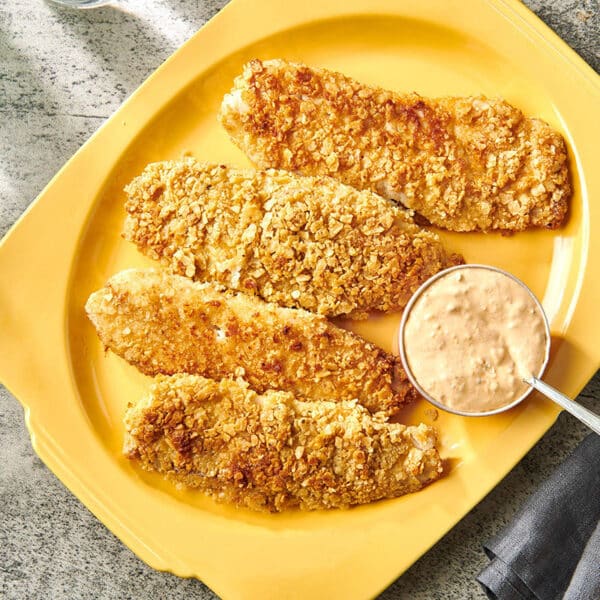
With seafood: The classic move. Crab cakes are the canonical pairing — serve it alongside or dolloped on top. It’s an excellent alternative to cocktail sauce with shrimp, and it’s excellent with fried fish, grilled salmon, poached salmon, sautéed scallops, and lobster.
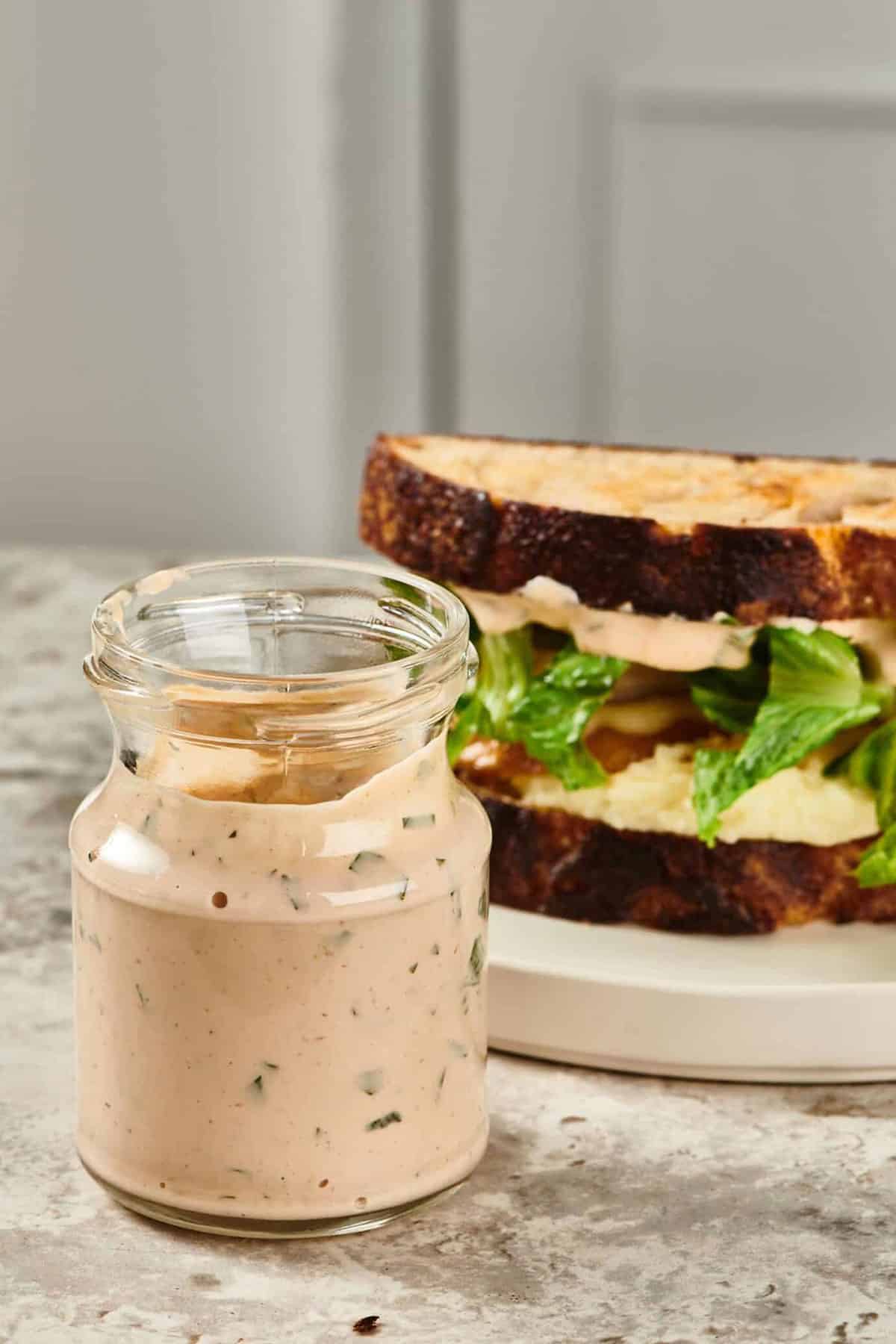
On sandwiches: Use it anywhere you’d use mayo but want something with more personality. A shrimp po’boy. A leftover turkey sandwich. A fried fish sandwich. A veggie burger. It makes all of them notably better.
With fried things: Fried shrimp, zucchini fritti, fried green tomatoes, french fries. Any time something comes out of hot oil, remoulade is the right dipping sauce.
With vegetables: Steamed or grilled artichokes, grilled asparagus, grilled vegetables of any kind. A bowl of remoulade on a vegetable platter will disappear faster than you’d expect.
As a crostini spread: Toasted bread, a smear of remoulade, a piece of seafood or maybe some roasted red peppers on top. Instant appetizer.
The unexpected one: Grilled cheese corners, for dipping. Try it once.
What to Serve With Remoulade


More Homemade Sauce Recipes
Pin this now to find it later
Pin It
Remoulade Sauce
Ingredients
- ¾ cup mayonnaise
- 3 tablespoons ketchup
- 1 tablespoon brown mustard
- 3 tablespoons finely chopped celery
- 1 ½ tablespoons finely chopped fresh parsley
- 1 tablespoon finely chopped scallions
- Kosher salt and freshly ground black pepper (to taste)
Instructions
- Blend together the mayonnaise, ketchup, mustard, celery, parsley, and scallions in a medium-sized bowl.
- Season with salt and pepper. Chill for at least a couple of hours to allow the flavors to meld.










Love this sauce! Perfect for crab cakes and will become our new tartar alternative. Plus, it’s just so easy to whip up!