How to Cook Israeli Couscous on the Stove

on Mar 17, 2026
This post may contain affiliate links. Please read our disclosure policy.
Israeli couscous — also called Mediterranean couscous, pearl couscous, or couscous grande — is a small, round pasta made from semolina that toasts up nutty and cooks into something wonderfully chewy and satisfying. This stovetop method is fast, flexible, and works as a side dish, main course, or base for whatever you've got in the fridge. Vegetarian-friendly, kid-approved, and endlessly customizable.
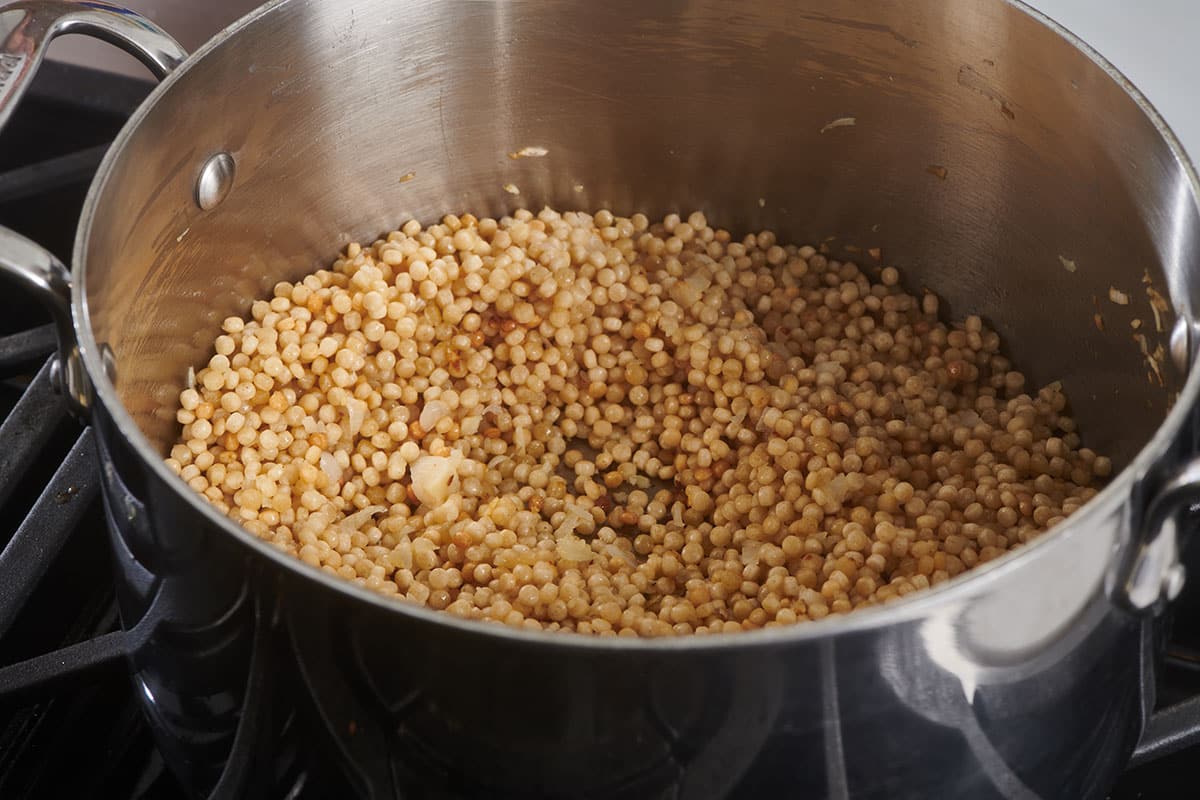
If you’ve never cooked Israeli couscous before, let me be the first to tell you: you’re about to become obsessed. Israeli couscous — also called pearl couscous, Mediterranean couscous, or couscous grande — is not actually couscous in the traditional sense. It’s tiny balls of toasted semolina pasta, and when cooked, they plump up into something chewy, toothsome, and just a little bit addictive. It takes about 20 minutes on the stove, it goes with practically everything, and once you learn how to cook Israeli couscous, you will find yourself making it constantly. It happened to me.
What's In This Post?
- What Is Israeli Couscous?
- Why You’ll Love Israeli Couscous
- Ingredients
- How to Cook Israeli Couscous: Step by Step
- Tips for the Best Israeli Couscous
- How to Serve Israeli Couscous
- How to Store and Reheat
- FAQs
- Recipes With Israeli Couscous
- How to Cook Israeli Couscous on the Stove Recipe
- More Basic Cooking Tips
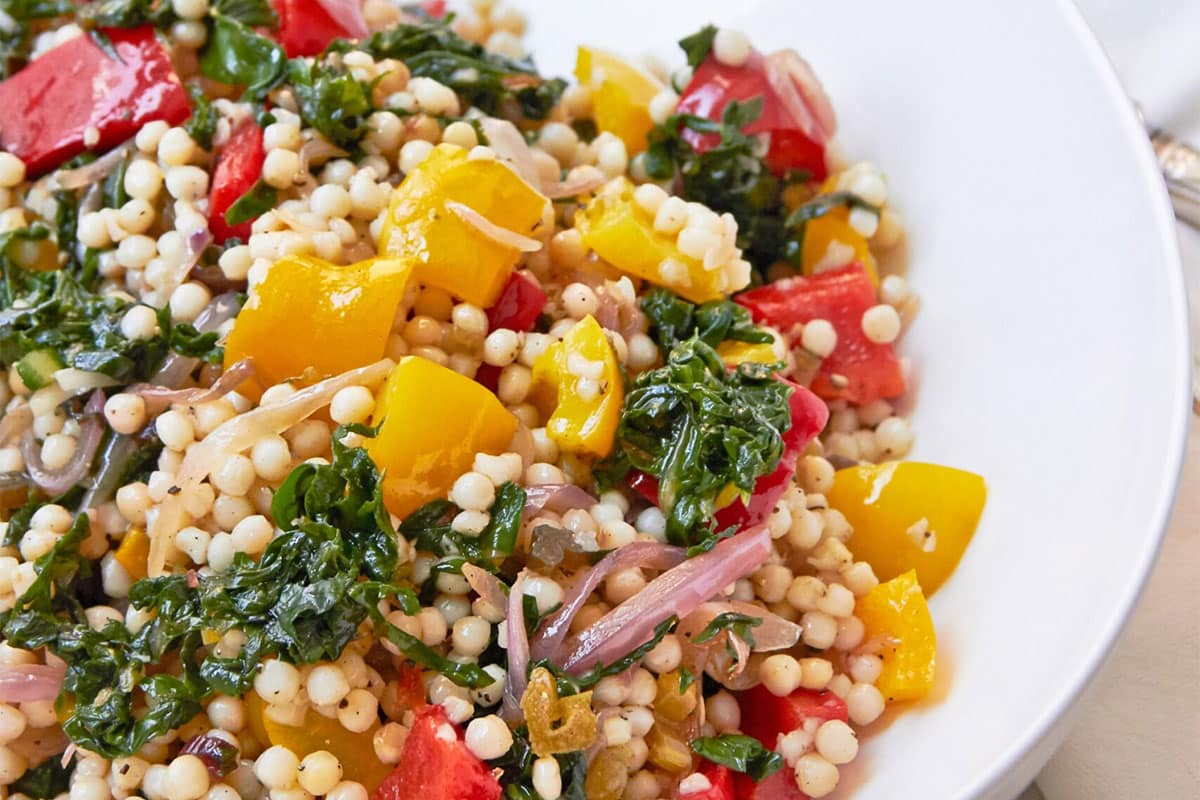
What Is Israeli Couscous?
Regular couscous is nice. I know it has a lot of fans. I’ve just never personally fallen head over heels. But this bigger, rounder, pearl-sized version? I’ve been in love with it for years.
I once read a description of Israeli couscous as “creamy pearls of pasta.” I wish I had made that up, but I didn’t. But it’s accurate, and it’s beautiful, and I want it on a throw pillow.
By signing up, you agree to our Privacy Policy.
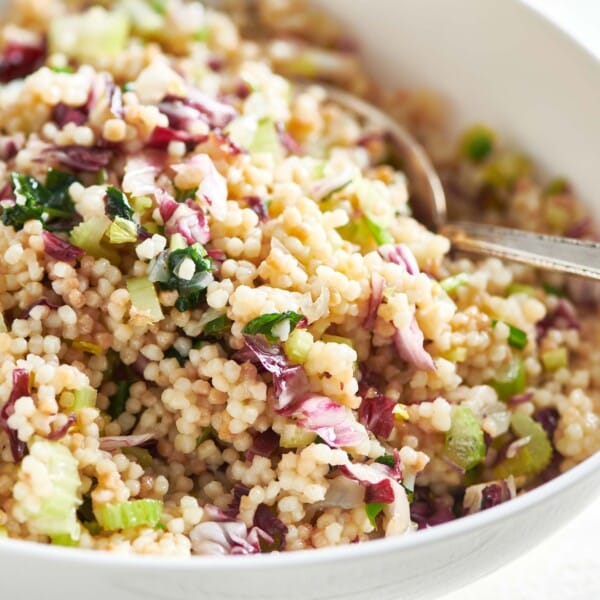
Israeli couscous is made from semolina — the same stuff as your pasta — shaped into small spheres and toasted before drying. That toasting is part of what gives it such a nutty, slightly complex flavor. When you cook it, the little balls plump up and become tender but still chewy, with just enough bite to make each forkful satisfying. It’s got a texture that’s more interesting than rice, more substantial than regular couscous, and more fun to eat than almost anything else I can think of.
Why You’ll Love Israeli Couscous
- It’s easily vegetarian. Use vegetable broth (or water) instead of chicken broth, skip the bacon, and you’ve got a vegetarian dish that works as a side for everyone at the table or as a main course for the non-meat-eaters.
- It’s a great fork-in-the-road dish. If you need a plain side dish for your pickiest kid but want something with a little more going on for yourself, cook one batch and go in different directions. Set aside a plain portion for your most finicky eater, add some olives and lemon juice for your slightly more adventurous one, and throw in the feta, roasted peppers, herbs, and the whole kit and caboodle for yourself.
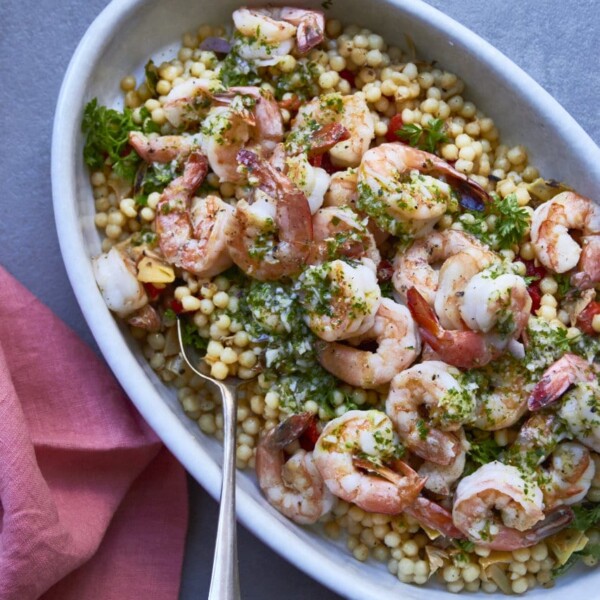
- It goes with everything. Serve it as a side dish, pile it into bowls, or use it as a bed for sliced steak, roasted salmon, or grilled chicken. Stir in some cooked shrimp or chunks of chicken, and suddenly it’s a main course.
- It’s genuinely flexible with ingredients. No shallots? Use onion or garlic (less garlic, more onion). No feta? Skip it. No olives? Fine. No bacon? Then it’s vegetarian. You can leave out any two of the add-ins, and it will still be great. The base recipe is what matters, and the rest is choose-your-own-adventure.
Ingredients
You can use just olive oil or just butter, and it will be fine; I love the flavors of both, so I like to use a little combo.
- Olive oil
- Butter
- Minced shallots
- Israeli couscous – Also sold as pearl couscous, Mediterranean couscous, or couscous grande
- Water or broth – Chicken or vegetable, preferably less-sodium
- Kosher salt and freshly ground black pepper
How to Cook Israeli Couscous: Step by Step
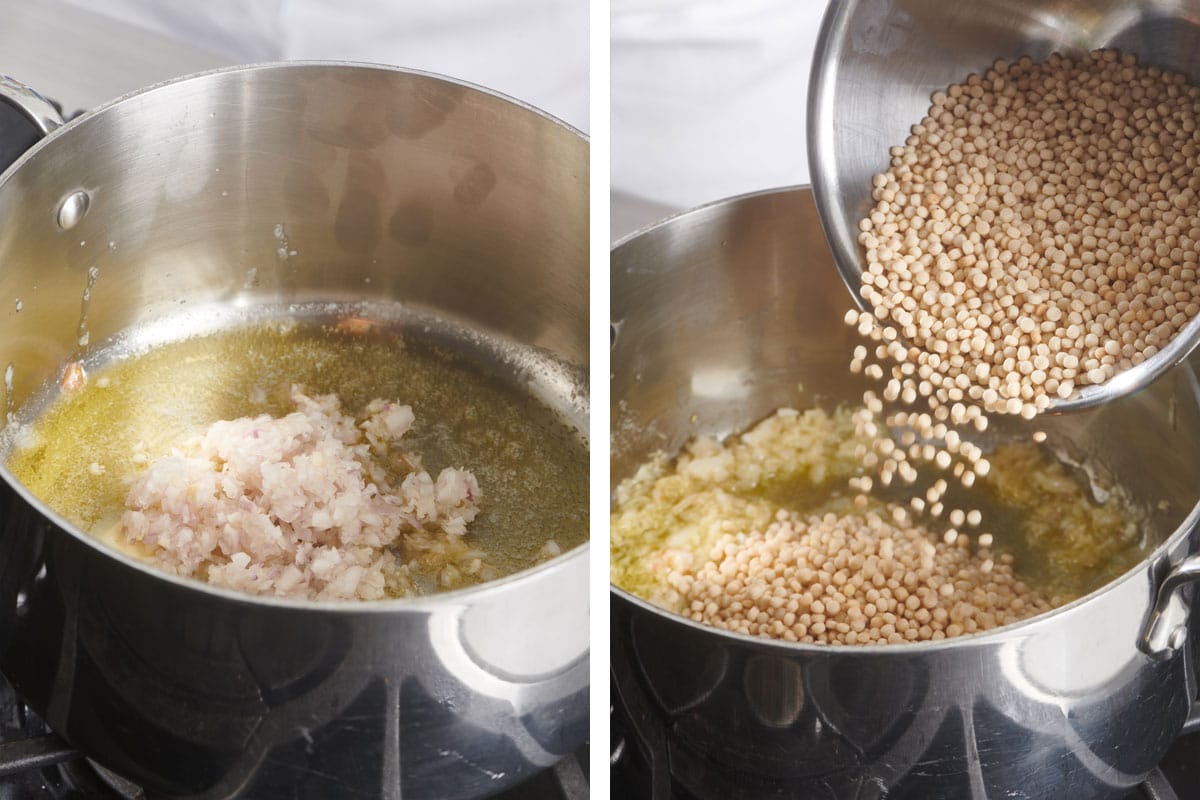
- Toast the couscous: Heat the butter and olive oil together. Sauté the shallots until softened. Add the couscous and stir for 3 to 4 minutes, until the little pearls are coated with the shallot mixture and starting to turn lightly golden. Don’t skip this step — toasting the couscous is what gives it that nutty depth of flavor that makes people ask what your secret is.
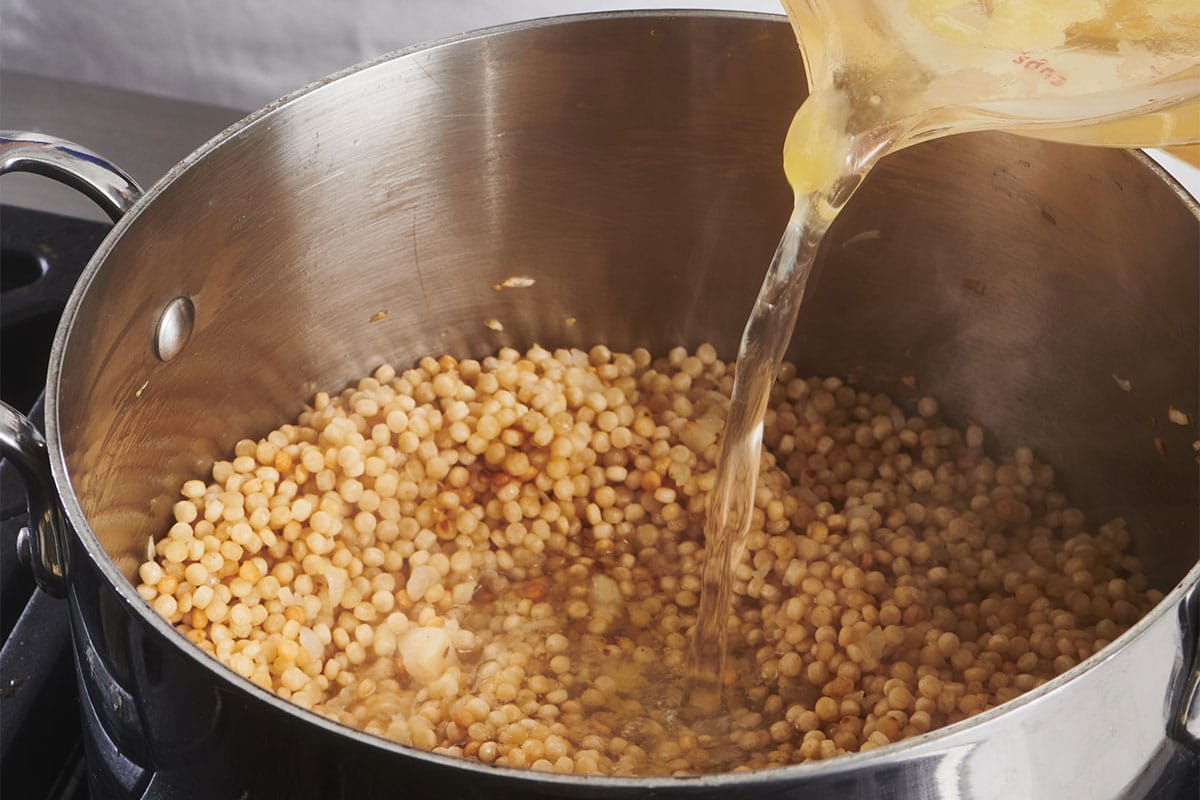
- Add the liquid. Season generously with salt and pepper.
- Cook, covered. Bring to a boil, then reduce the heat to a simmer. Cover and cook for 12 minutes, until most of the liquid has been absorbed. Remove from the heat and let the pot sit, still covered, for 5 minutes. This resting time lets the couscous absorb the remaining liquid and finish cooking gently, which gives you perfectly tender, non-soggy results.
- Add your extras. Fluff the couscous with a fork, taste for seasoning, and stir in whatever add-ins you’re using. Serve warm or at room temperature, or in your favorite recipe.
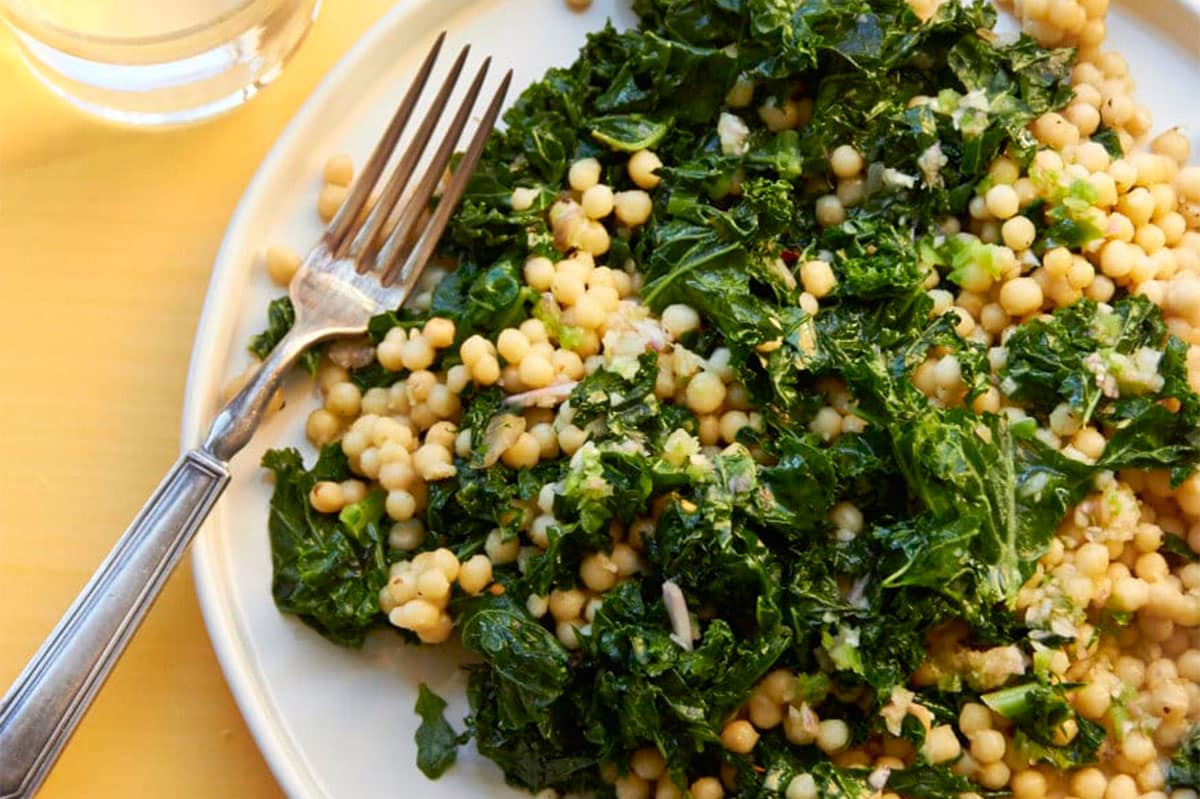
Tips for the Best Israeli Couscous
- Don’t skip the toast. I said it above, and I’ll say it again. Stirring the dry couscous in the butter and oil for a few minutes before adding liquid is the single most important step for flavor. It takes 4 minutes. Do it.
- Use broth if you’ve got it. Water works fine, but broth (chicken or vegetable) adds another layer of savory depth that makes the finished dish taste like you did something fancy when you really didn’t.
- Let it rest. The 5-minute covered rest off the heat is not optional. It’s what finishes the cooking and prevents mushiness. Set a timer and walk away.
- Room temperature is your friend. Unlike rice, Israeli couscous is excellent served at room temperature, which makes it ideal for meal prep, potlucks, and dinner parties where you don’t want to be fussing with reheating things.
- The pearl-chasing situation. As a bonus, it is genuinely funny to watch small children chase the little pasta balls around their plates with a fork. If you want to be nice, give them a spoon — but it’s not nearly as entertaining. Chopsticks would be absolutely hysterical.
How to Serve Israeli Couscous
Optional add-ins (use any, all, or none):
- 4 strips bacon, cooked and crumbled
- 1/2 cup jarred roasted red peppers, diced
- 1/2 cup pitted kalamata olives, roughly chopped
- 1/2 cup crumbled feta cheese
- Zest and juice of 1 lemon
- 1/4 cup fresh flat-leaf parsley or basil, chopped
- Pinch of red pepper flakes
A few of my favorite ways to enjoy Israeli couscous:
- As a side dish alongside roasted chicken, grilled fish, or lamb chops.
- Under a piece of salmon — roast it, set it right on top of a bowl of this couscous, done.
- Under sliced steak — pile it on a platter, fan the steak over the top, drizzle with the pan juices.
- As a vegetarian main with all the add-ins (no bacon, obvs) plus a handful of arugula stirred in at the end.
- In a grain bowl with a soft-boiled egg, some greens, and a tahini drizzle.
- Meal-prepped in the fridge for quick weekday lunches — it holds up beautifully for 4 to 5 days.
How to Store and Reheat
Store leftover Israeli couscous in an airtight container in the refrigerator for up to 5 days. Reheat gently in a saucepan with a small splash of water or broth, stirring until warmed through. Or don’t reheat it at all — it’s excellent cold or at room temperature straight from the fridge, tossed with a little olive oil and a squeeze of lemon.
FAQs
Nope, more like cousins. Regular couscous is made from crushed semolina that’s steamed; it’s fine and fluffy and cooks in minutes. Israeli couscous (also called pearl couscous) is made from semolina that’s rolled into larger spheres and toasted, giving it a chewier texture and nuttier flavor.
They’re similar in some ways — both are small, pasta-based, and work beautifully as side dishes — but orzo is rice-shaped while Israeli couscous is round. Israeli couscous also has that toasted flavor that orzo doesn’t, and a chewier bite. However, they can often substitute for each other.
Yes, and enthusiastically. Make it up to 2 days ahead, store covered in the fridge, and bring to room temperature (or reheat gently) before serving.
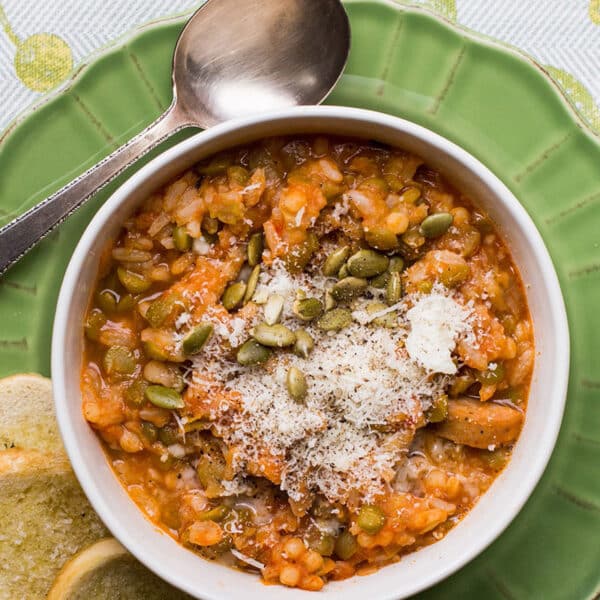
Recipes With Israeli Couscous
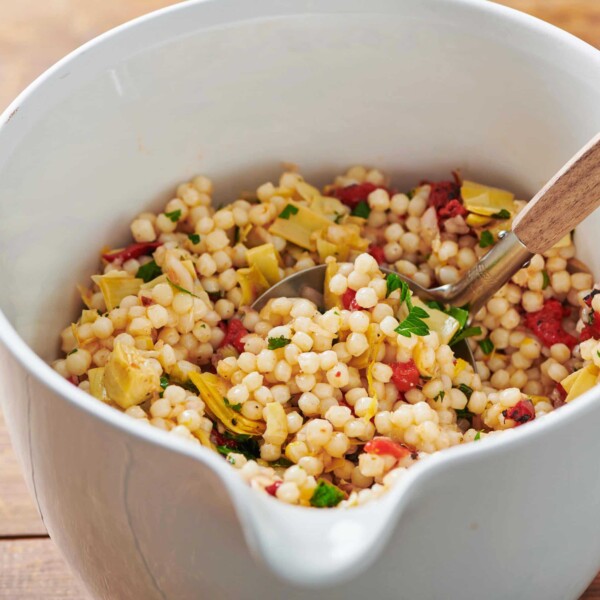
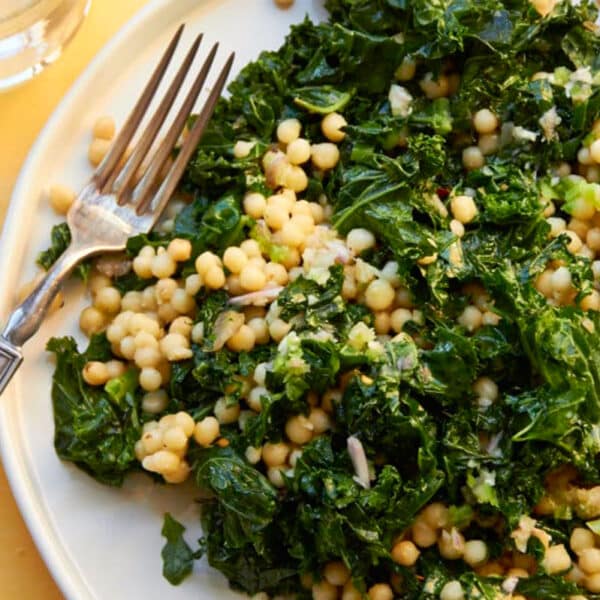
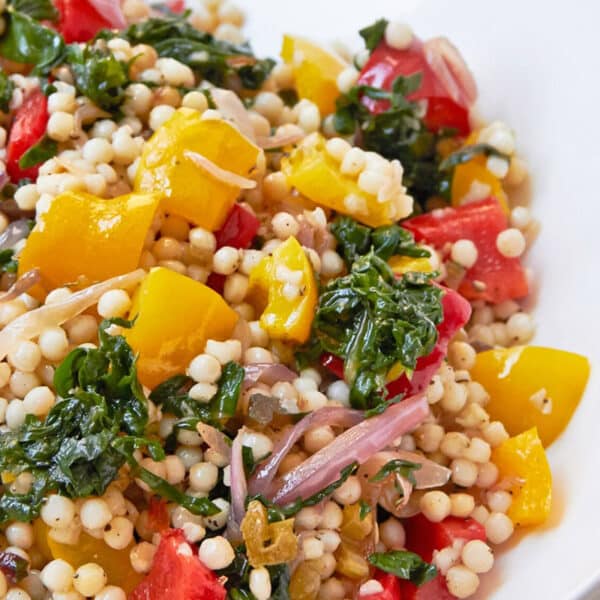
Pin this now to find it later
Pin It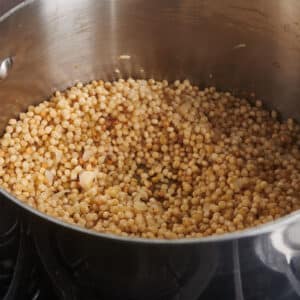
How to Cook Israeli Couscous on the Stove
Ingredients
- 1 tablespoon olive oil
- 1 tablespoon butter
- 2 large shallots (minced)
- 1½ cups Israeli couscous
- 3¼ cups water or less-sodium broth (chicken or vegetable)
- Kosher salt and freshly ground black pepper (to taste)
Instructions
- In a large saucepan over medium-high heat, heat the butter and olive oil. Add the shallots and sauté until softened and translucent, about 4 minutes. Add the couscous and stir for 3 to 4 minutes, until the couscous is coated with the shallot mixture and starting to lightly brown.
- Add the water or broth and stir well. Season with salt and pepper.
- Cover and cook for 12 minutes, until most of the liquid has been absorbed. Remove from the heat and let sit, covered, for 5 minutes, until the rest of the liquid is absorbed.
- Fluff with a fork, stir in any add-ins, taste for seasoning, and serve.
Notes
- Make the couscous vegetarian by using vegetable broth or water, and skip the optional bacon add-in.
- Serve the couscous as a side, mix into other recipes, or use it as a bed for steak, salmon, or chicken.