Jewish Brisket for the Holidays

Updated Mar 05, 2026
This post may contain affiliate links. Please read our disclosure policy.
Cooked low and slow in the oven, this is Jewish comfort food at its best. Perfect for Passover, Rosh Hashanah, Seder, and any chilly winter night.

If there’s no brisket on the table, is it even a holiday? Not in my house.
This is classic Jewish-style brisket: braised low and slow in the oven with tomatoes, red wine, and broth until it’s fall-apart tender and deeply savory. No searing required — it goes together in about 20 minutes, then the oven does all the work for the next few hours while your house smells absolutely incredible.
I’ve made this recipe at least 50 times — for Rosh Hashanah, Passover, random cold Sundays when everyone needed comfort food. It has never once let me down.
By signing up, you agree to our Privacy Policy.
Two things make this recipe stand out: you don’t have to sear the meat (one less step, one less splatter situation), and it is genuinely, significantly better when made a day or two ahead. More on both of those below.
What's In This Post?
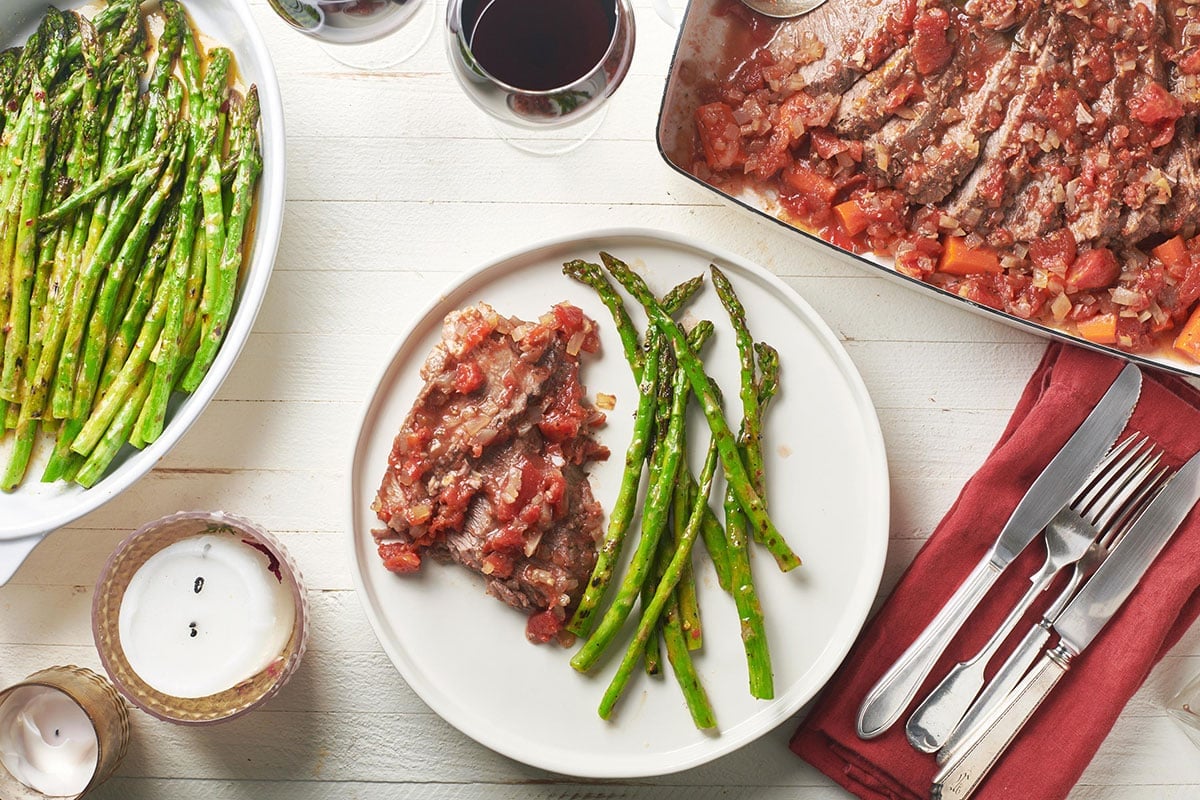
Why Make It Ahead
Making brisket ahead isn’t just a convenience move — it actually makes the brisket better, and here’s why:
- The flavor improves. The meat relaxes into the braising liquid overnight and the whole thing becomes more cohesive and deeply savory.
- The fat skims itself. Chill the pot overnight and the fat rises and hardens on the surface. Lift it off in one clean layer. Your sauce goes from good to great.
- Slicing is easier cold. Brisket slices cleanly when it’s cold, then you nestle the slices back into the sauce and reheat gently. No wrestling with hot meat.
- Day-of is basically just reheating. Which, during a holiday meal with twelve things going on, is everything.
The Sauce
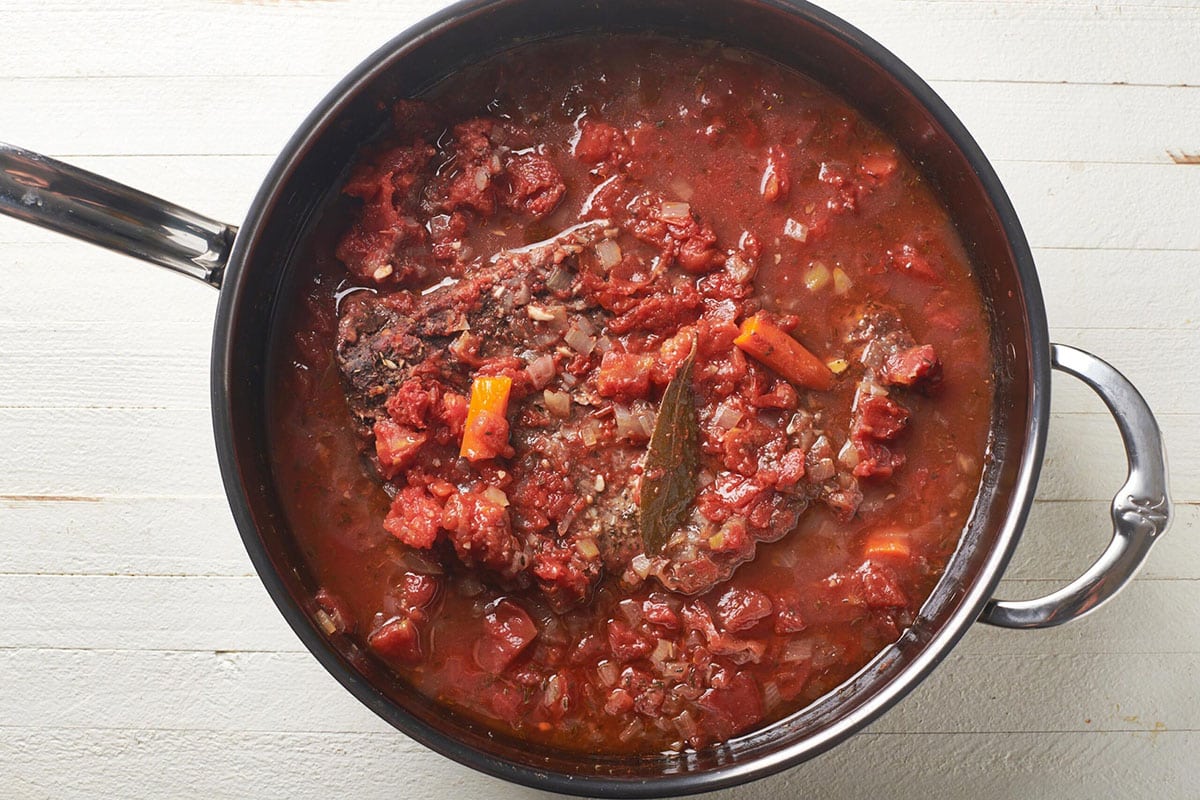
Three liquids go into this brisket: beef broth, crushed tomatoes, and red wine. Together they make a rich, complex braising liquid that becomes an incredible sauce. If you only have one or two of them, that’s fine — just aim for about 6 cups total liquid. Tomato paste adds depth; if you don’t have any, a few squirts of ketchup work, or skip it entirely.
Brisket is forgiving about what it braises in. The long, slow cook is what matters most.
Choosing Your Cut
- First cut (flat cut): Leaner, slices beautifully, great if you want neat portions.
- Second cut (point cut): More fat marbling, harder to dry out, more forgiving. My preference for holidays when I can’t afford a mistake.
Either works. Just look for good marbling — the fat is what keeps this juicy over a long braise.
Leftovers
Plan for them. Make more brisket than you think you need — my family loves the leftover brisket barley soup almost as much as the original dinner, and leftover brisket makes an outrageously good sandwich the next day. Brisket keeps refrigerated for up to 6 days, or freeze it in its sauce for up to 6 months.
FAQs
Nope — and that’s one of the things I love about this recipe. Skipping the sear saves time, a pan, and a stove full of splatter. The long braise develops all the flavor you need.
First cut is leaner and slices more neatly. Second cut has more fat and is harder to dry out. Both work; the second cut is more forgiving.
Yes. Sear optional, braise on low for 8–10 hours. The oven gives slightly better caramelization on the edges, but the slow cooker is a solid option.
It can be — skip the wine or use Kosher wine, use Kosher beef, and pair with pareve or meat-friendly sides. For Passover, serve with roasted potatoes or a potato kugel instead of noodles.
Always reheat in its braising liquid, covered, at 325°F until warmed through. Never reheat brisket without sauce.
Always against the grain. Look for the direction the muscle fibers run and cut perpendicular to them. Cold brisket slices more cleanly than hot.
What to Serve With Jewish Brisket
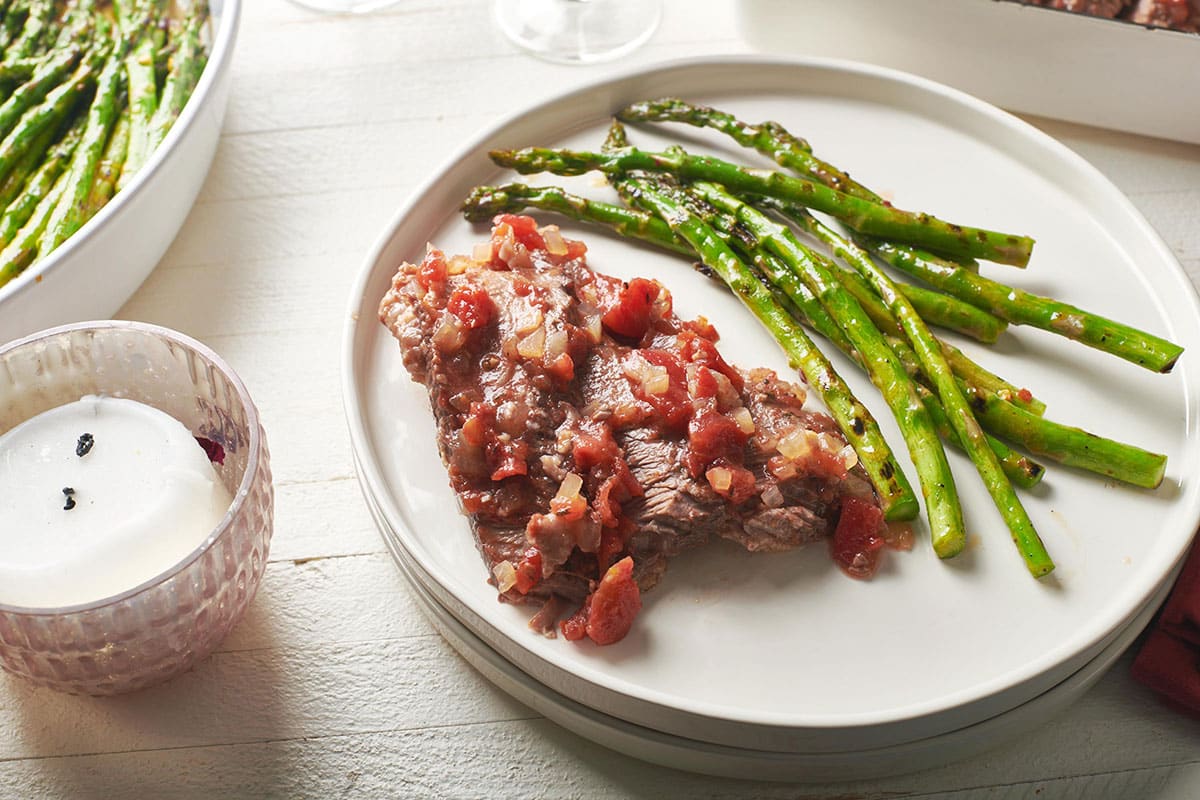
Pick and choose for a Rosh Hashanah, Hanukkah, or Passover Menu. Serve this traditional Ashkenazi Jewish brisket recipe with mashed potatoes, roasted potatoes, or noodle kugel. Pick your side dishes accordingly if you want the meal to be Kosher or Kosher for Passover.
- I always serve a salad with dinner — some favorites are Chopped Winter Salad, Romaine and Slivered Kale Salad with Lemon Dressing, and Mixed Lettuce Salad with Mustardy Dressing.
- Choose one or two simple vegetables to accompany this brisket, such as Roasted Asparagus, Sautéed Broccoli Rabe, or Roasted Lemon Brussels Sprouts.
Pin this now to find it later
Pin It
Jewish Brisket
Ingredients
- 1 teaspoon olive oil
- 2 teaspoons minced garlic
- 1 teaspoon dried thyme
- ¼ teaspoon freshly ground black pepper
- 1 first-cut beef brisket (4 to 5 pounds)
- 2 cups chopped onions
- 4 large carrots (peeled and thickly sliced)
- 3 bay leaves
- 3 tablespoons tomato paste (optional; see the Cooking Tip)
- 1 cup low-sodium beef or chicken broth
- 1 (28-ounce) can crushed tomatoes (in juice or puréed)
- 1 cup red wine (any kind is fine; or an additional cup crushed tomatoes or broth)
- 2 tablespoons finely chopped Italian flat-leaf parsley (optional; for garnish)
- 1 teaspoon kosher salt
Instructions
- Preheat the oven to 325°F.
- Place the olive oil, garlic, thyme, salt, and pepper in a small bowl and stir to mix. Rub the mixture all over.
- Place the brisket, fat side up, in a large casserole or Dutch oven with a tight-fitting lid. Toss in the onions, carrots, and bay leaves. If you are using the tomato paste, blend it into the broth, then pour over the meat and vegetables. Then, pour the crushed tomatoes and red wine, if using, on top. The liquid should cover the meat and most of the vegetables. Cover the casserole and bake the brisket until the meat is very tender, 3 to 3 1/2 hours.
- If you are serving the brisket the next day, let it cool, then put the entire casserole in the refrigerator. About an hour before serving, skim off any hardened fat, then take out the meat and cut off any excess fat from the top of the meat. Slice the brisket across the grain, as thin or thick as you like, then neatly return the sliced meat to the cooking liquid. Reheat the brisket on the stovetop over medium-low heat or in a preheated 325°F oven, until everything is warmed through and the cooking liquid has reduced and thickened up a bit, about 30 minutes in the oven, maybe less on the stovetop. Adjust seasonings as needed.
- If you are serving the brisket right away, remove the meat from the casserole and let it rest on a platter loosely tented with aluminum foil. Let the cooking liquid and vegetables sit for about 15 minutes, then spoon off any fat that has accumulated. Place the casserole over medium-high heat and simmer, stirring occasionally, until the liquid reduces a bit, about 10 minutes. Adjust seasonings as necessary. Slice the meat neatly across the grain, return it to the pot, and remove and discard the bay leaves.
- You can serve the brisket in the casserole or transfer it to a large shallow bowl. Remove and discard the bay leaves and sprinkle the parsley on top of the brisket, if desired.
Notes
Cooking Tips
- You’ll see that the brisket recipe calls for three liquids: broth, tomatoes, and wine. If you use only one or two of these and just make the quantity equal to about 6 cups of liquid, the results will be fine.
- The tomato paste adds richness to the cooking liquid and is great, but if you don’t have any, add some squirts of ketchup or skip it altogether.
- The reason brisket tastes so good is mostly because of its long, slow cooking in liquid, and it’s fairly magnanimous about what kind of liquid it is braised in.
- Leftover brisket? Use it to make Brisket Barley Soup.
Nutrition
More Jewish Holiday Main Course Options
- Chicken Marbella
- Chicken Thighs with Onions and Green Olives
- Garlicky Roast Chicken with Shallots and Potatoes
- Beef Brisket with Wild Mushrooms (another Jewish-style brisket!)









I made this brisket a month ago and you are right — it was the best ever! I am making it again for a larger group and will double the recipe. If I have an 8-lb brisket, how would I change the cooking times?
I would add an hour to each of the two stages!
I picked up some very lean flat and decided to try a Jewish recipe as this style of cooking is not familiar to me. I settled on this recipe as it did not call for onion soup mix, ketchup, or anything else processed. I also like that no frying of the meat or vegetables was required. The result: fantastic! Out of the oven the meat was a bit dry but after slicing and a short rest in the sauce it was tender and delicious. We ate it two days in a row!
I love this recipe and was thinking of using an enameled cast iron casserole as it appears to be in one in the recipe photos- but I have never put my enameled cast iron in the fridge before. Anyone know if it’s safe to put it in the fridge overnight?
yes, it’s fine! I’m so glad you love the recipe (it’s in my own oven as I write this!)
I LOVE your cookbook! I’ve given 7 away as gifts!! I am so excited to be trying to make brisket for the first time this week. I’m from the south so the only brisket I’ve had is at BBQ joins where it’s served with coleslaw, baked beans, and potato salad. What sides would be appropriate with this dish?
that is so great to hear! It’s really anything you would think of with a pot roast or anther roast….roasted vegetables, andy kind of starch (mashed potatoes or roasted potatoes especially good), maybe steamed or roasted asparagus. Sauteed or roasted carrots or butternut squash. You’ll want to add color to the place, with the brown meat and the pale starch. And I always make salad with everything. let me know how it goes!
Hello, I found this recipe in your cookbook, and I was curious if you think the brisket could be cooked in a slow cooker, as opposed to in the oven?
I’m quite sure that would work perfectly well!
do you worry about the fat in this ?
that’s why I like to make it ahead; it’s easier to remove the fat once it rises to the top and hardens in the fridge.
I love brisket and will have to try your recipe. After reading your book, I also want to try the Beef Barley Soup, in addition to my other favorites with leftover brisket.
Loved the brisket and loved the beef barley soup. Both are definitely going in my rotation of meals.
Family favorites, both!