How to Caramelize Onions

Updated Jan 23, 2026
This post may contain affiliate links. Please read our disclosure policy.
Caramelized onions are one of the most useful kitchen skills you can master. This guide walks you through exactly how to turn raw onions into soft, deeply golden, sweet ribbons using simple techniques and a little patience — plus tips to avoid burning and speed things up when needed.

Learning how to caramelize onions is one of those small cooking skills that pays off again and again. With just onions, a bit of fat, and time, you can transform something sharp and crunchy into something deeply sweet, silky, and irresistible — the kind of thing that makes burgers, pastas, pizzas, and soups instantly better.
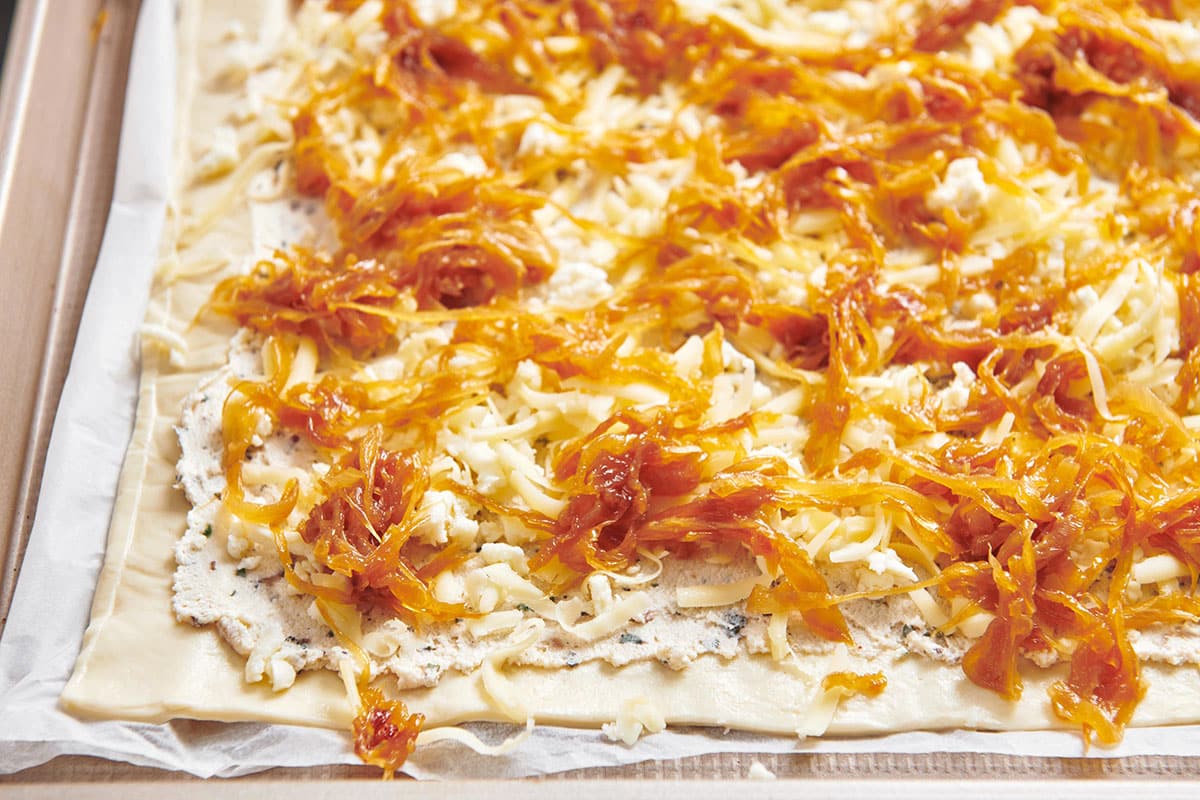
You can add caramelized onions to all kinds of dishes. Use them for burgers or sandwiches, as a pizza topping, on crostini or bruschetta, or in a homemade hummus. More caramelized onion recipes and ideas below!
What's In This Post?
- What Are Caramelized Onions?
- What Kind of Onions Are Best for Caramelizing?
- Tips for Perfect Caramelized Onions
- What the onions look like as they caramelize…
- How Long to Cook Caramelized Onions
- Troubleshooting: How to Avoid Bitter or Burnt Caramelized Onions
- How to Use Caramelized Onions
- How Long Will Caramelized Onions Last
- Recipes With Caramelized Onions
- How to Caramelize Onions Recipe
- More Good to Know Kitchen Smarts!
What Are Caramelized Onions?
Caramelized onions are just onions that have been sliced (sometimes chopped, usually sliced) and cooked with a bit of butter or oil and salt over low heat for quite a while, until they are very soft and nicely browned — but not too dark.
By signing up, you agree to our Privacy Policy.
Some cooks add a bit of sugar to help the browning process and enhance the cooked onions’ natural sweetness. That’s optional, but I find it helpful, and it doesn’t take much to bump up the sweetness.
What Kind of Onions Are Best for Caramelizing?
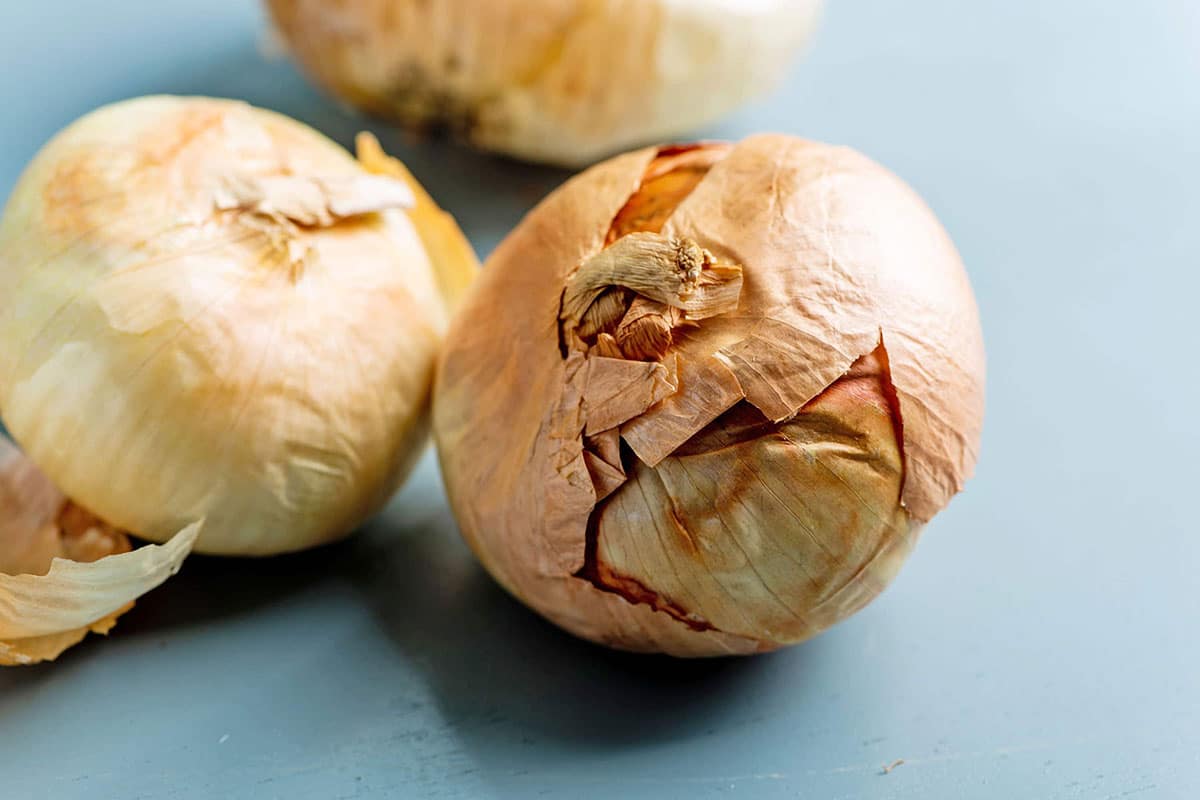
You can use any onions for caramelizing, red, yellow, white, or sweet varieties all work. If you are using sweet onions, like Vidalia, which are already sweeter than your basic yellow or red onions, then you can skip the optional sugar.
Tips for Perfect Caramelized Onions

Use a large skillet
You want to use a very large skillet with as much surface area as possible so that the onions can have as much contact as possible with the bottom of the pan. This is what makes them brown.
Add a bit of fat
You don’t need much fat in the pan to slowly cook onions, but you do need some. I would say about 2 teaspoons of fat per onion is good, and you can use olive oil or butter or a combo of both (which is lovely!). You could also use ghee or another cooking oil.
Keep the heat at medium to medium-low
You’ll probably want to start with the heat at medium, and then once the onions start to brown, lower the heat so that they continue to cook and soften and get sweeter, but don’t get too brown or burn.
Take your time
Properly caramelized onions need to cook low and slow to really release their sugars without burning, and get that wonderful silky texture and sweet flavor. You can cook onions over high heat, stirring much more often, and get nicely browned onions, but they won’t get that softness and sweetness that a long cooking time over low heat yields.
Stir often, but not too often.
You want to allow the onions to sit on the bottom of the pan for a bit of time between stirs, so that they have a chance to take on color, but not let them sit without stirring for long enough for them to darken too quickly. At the end, you will need to stir more frequently, as the onions reach their final level of brown-ness.
Add the sugar towards the end, if using
Adding the sugar for the last 15 minutes of cooking or so ensures that it bumps up the natural sweetness of the caramelized onions, but doesn’t cause them to burn.
What the onions look like as they caramelize…
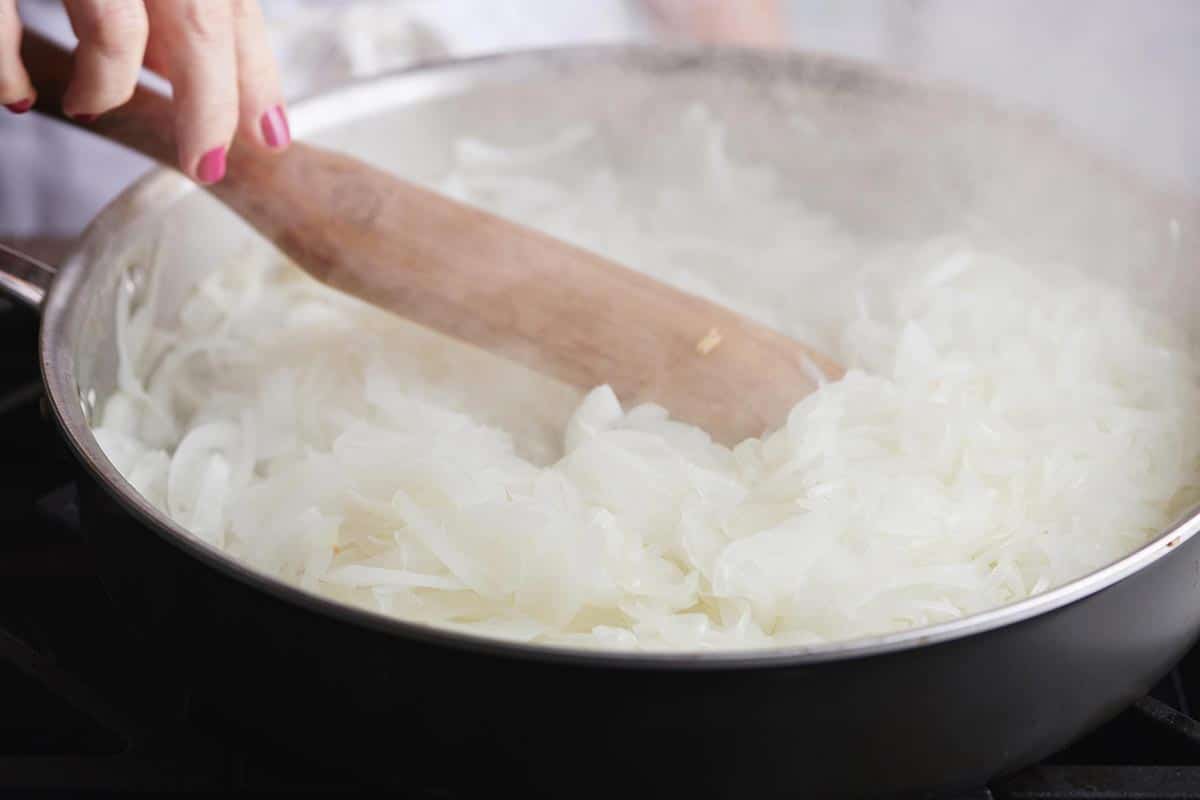
- At 10 minutes. They start to look translucent (slightly clear).

- At 20 minutes. They begin to turn golden.
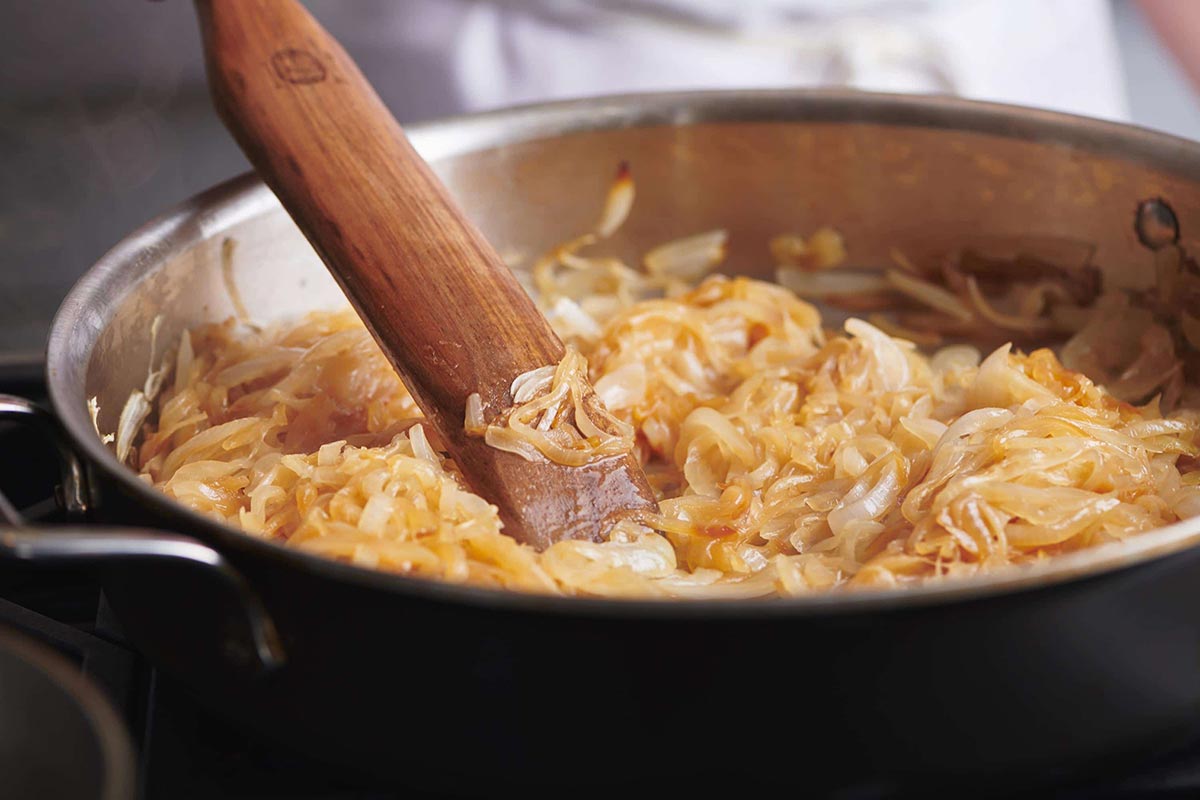
- At 30 minutes. They begin to turn golden brown.
- At 40 minutes. The onions are a bit darker and softer.
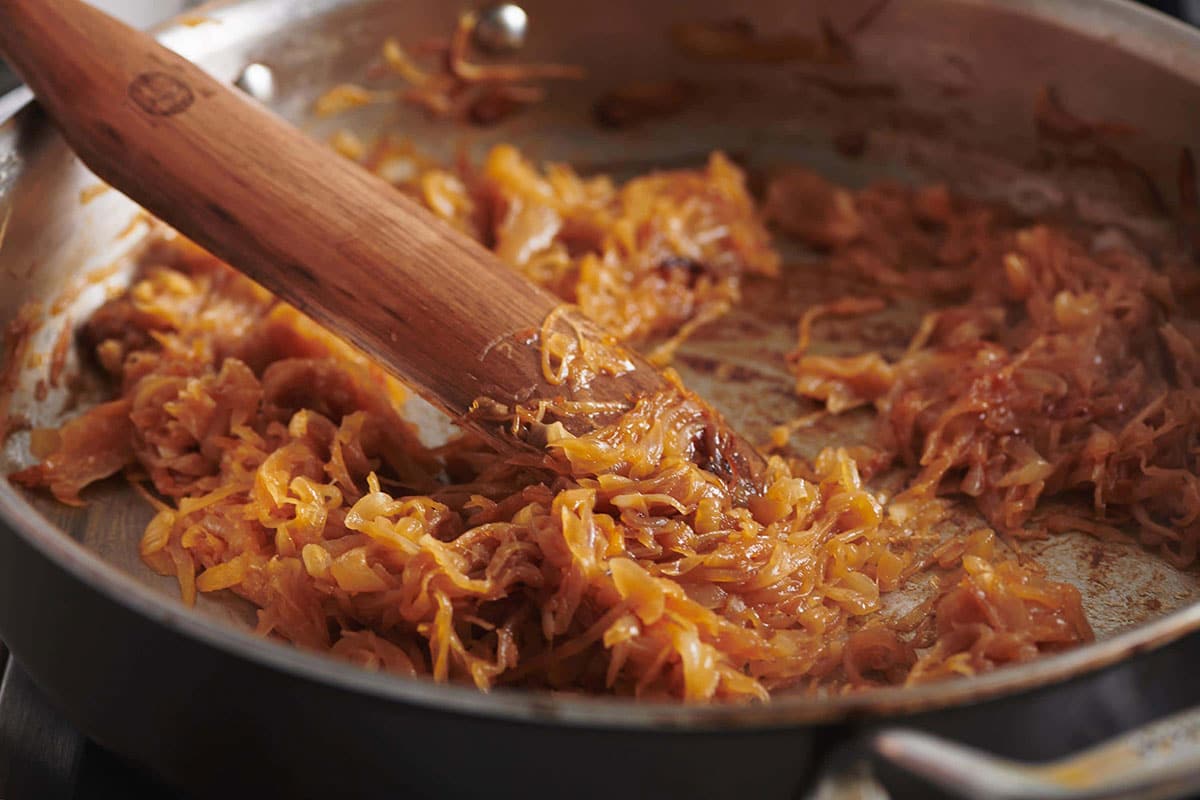
- Done at 50 minutes. Caramelized.
And this is what you are looking for! Soft, fairly collapsed, and pretty evenly browned with no burnt spots. Having said that, you may not want them to get super soft and richly brown, and you can stop cooking them whenever they reach your desired level of doneness.
How Long to Cook Caramelized Onions
Caramelized onions take between 30 and 50 minutes to cook, depending on how soft and browned you want them to be.
Troubleshooting: How to Avoid Bitter or Burnt Caramelized Onions
If your onions turn out bitter, acrid, or sadly scorched, don’t blame the onions. This is almost always a heat-and-patience issue.
- Your heat is too high. Caramelizing onions takes time — usually 30 to 45 minutes. If they start browning aggressively in the first 5 or 10 minutes, turn the heat down. Low to medium-low is where the magic happens.
- You walked away. I know. I do it too. But onions need occasional stirring so they don’t settle into one spot and burn. You don’t have to hover, just check in every few minutes like a responsible adult.
- The pan is too dry. If you see dark bits forming on the bottom of the pan, add a tablespoon or two of water, broth, or wine, and scrape it up. That’s called deglazing, doncha know.
- You rushed the salt. Salt helps draw out moisture, which is good — but adding a lot too early can cause onions to release liquid, then burn once that liquid cooks off. A small pinch at the beginning, then adjust at the end.
- They taste sharp instead of sweet. They’re not done yet. True caramelized onions are deeply golden and jammy, not pale brown and impatient.
Bottom line: lower heat, longer time, and a little attention. Caramelized onions reward patience!
How to Use Caramelized Onions
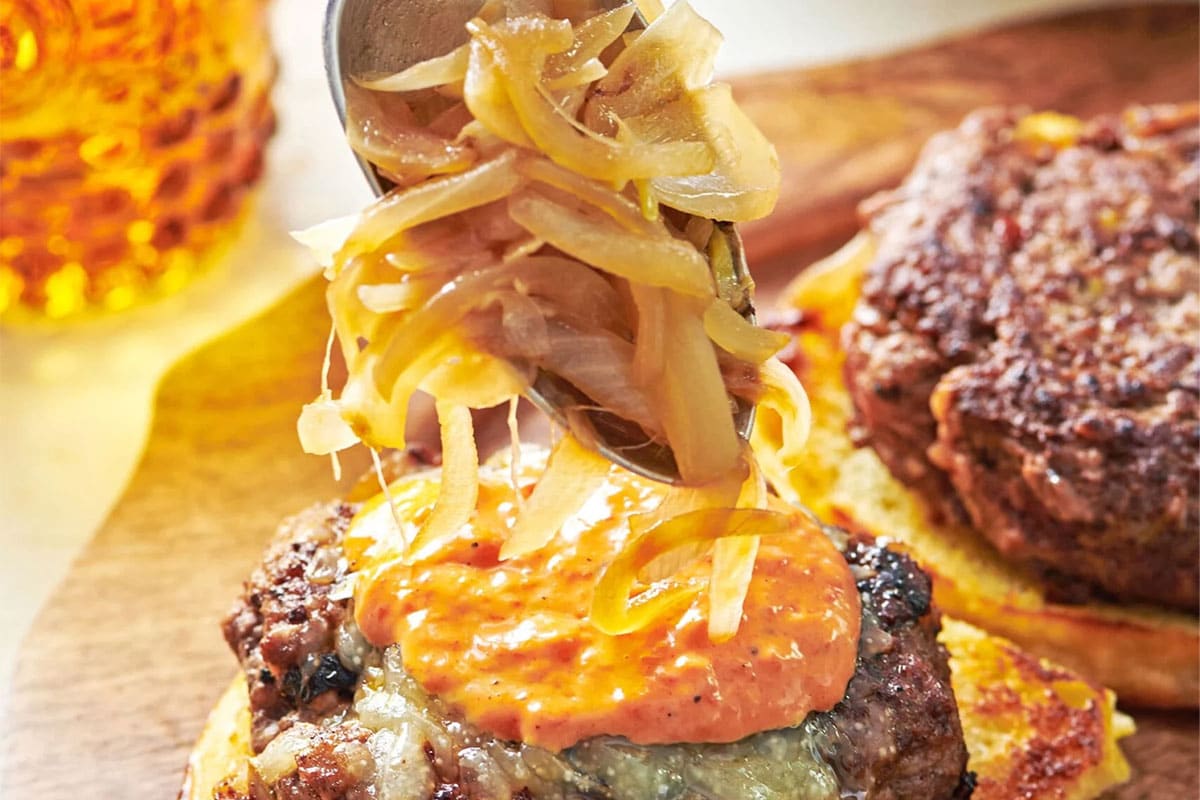
Oh boy, is a little container of caramelized onion in the fridge a wonderful opportunity. Warm them up (pan or microwave is fine) and use them to top burgers, sloppy joes, pulled pork sandwiches, all kinds of heroes and sandwiches. Use them in omelets, frittatas, quesadillas, on bruschetta and crostini.
How Long Will Caramelized Onions Last
They will last for up to 5 days in a sealed container in the fridge. Don’t let any go to waste — they are precious!
You can also freeze them for several months in an airtight container or freezer-proof zipper-top bag. Label them, because once frozen, it’s not readily obvious what they are! Defrost in the fridge or at room temperature.
Recipes With Caramelized Onions
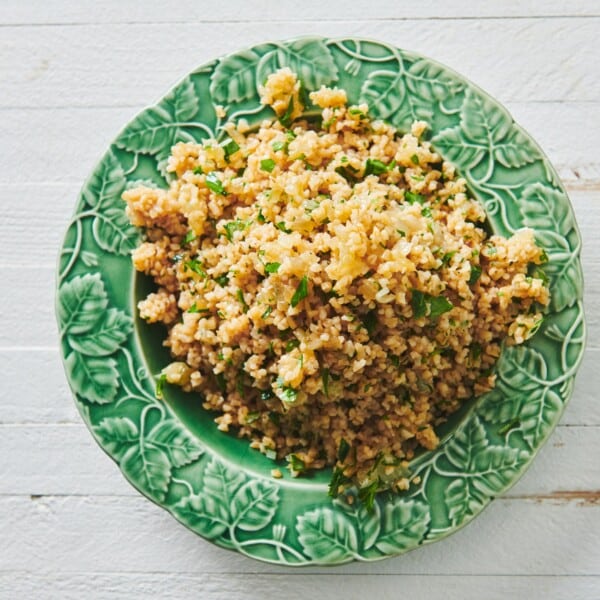
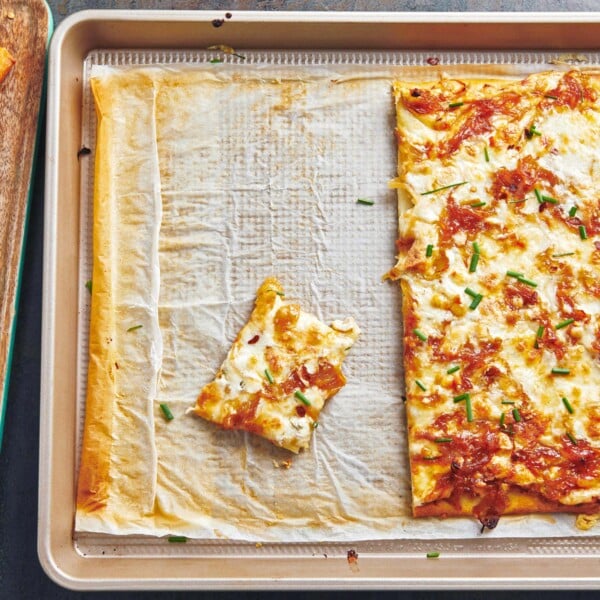
Here are some other recipe ideas that use caramelized onions.

Pin this now to find it later
Pin It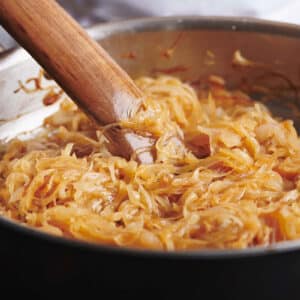
How to Caramelize Onions
Ingredients
- 5 large onions
- 2 tablespoons olive oil or butter (or a combination)
- Kosher salt (to taste)
- 1 teaspoon sugar (or more to taste)
- freshly ground black pepper (optional)
Instructions
- Peel and halve the onions. Slice the onions about 1/4-inch thick.
- Heat the oil or butter or a combination in a very large skillet over medium heat. When the oil is hot, add the onions. Season with a small amount of salt – too much will draw out too much moisture too quickly (you will add more at the end!). Cook, stirring occasionally, for about 30 minutes. Make sure the onions aren’t burning, but that they are getting darker. If needed, add a couple of tablespoons of water if the onions seem to be sticking.
- After 30 minutes, sprinkle over the sugar, if using. Either way, continue to stir and cook for another 15 to 20 more minutes, until the onions are as browned and soft as you like them. Taste and adjust the seasonings as needed; you will want to add more salt, probably, and perhaps some pepper. Remove from the heat and use.










I knew exactly what to do and for how long with the individual pictures at each stage of cooking. So super helpful and all my questions were answered. You are very thoughtful and great!!!
Omg!!! It looks amazing and sooooo doable!! Thank you!!
These are very good but I have discovered an easier way to accomplish the same results without all the time working the way you describe. I use a slow cooker and put the onions (3-8 large diced or sliced fine) in, add a few dashes of Whirstoshire (sic) sauce, a fair amount of butter, and stirred in at low temperature. Let it just sit for a day or so and leave it covered. Check after 12 hours and stir a little then leave it alone for another 12 hours. I’ve let it go for as long as 36 hours with no problems. The end result is even more savory than using a stove top method and makes onions that work in stress, meatloaves, soups, dips, sauces, and anything else you may want to make.
Is there anything better? Thanks Katie for laying it out so clearly.