How to Bake Salmon

Updated Feb 05, 2026
This post may contain affiliate links. Please read our disclosure policy.
This is my go-to method for baking salmon so it stays moist and flavorful, not dry or overcooked. A simple marinade, smart timing, and a 400°F oven make this an easy, reliable weeknight dinner.
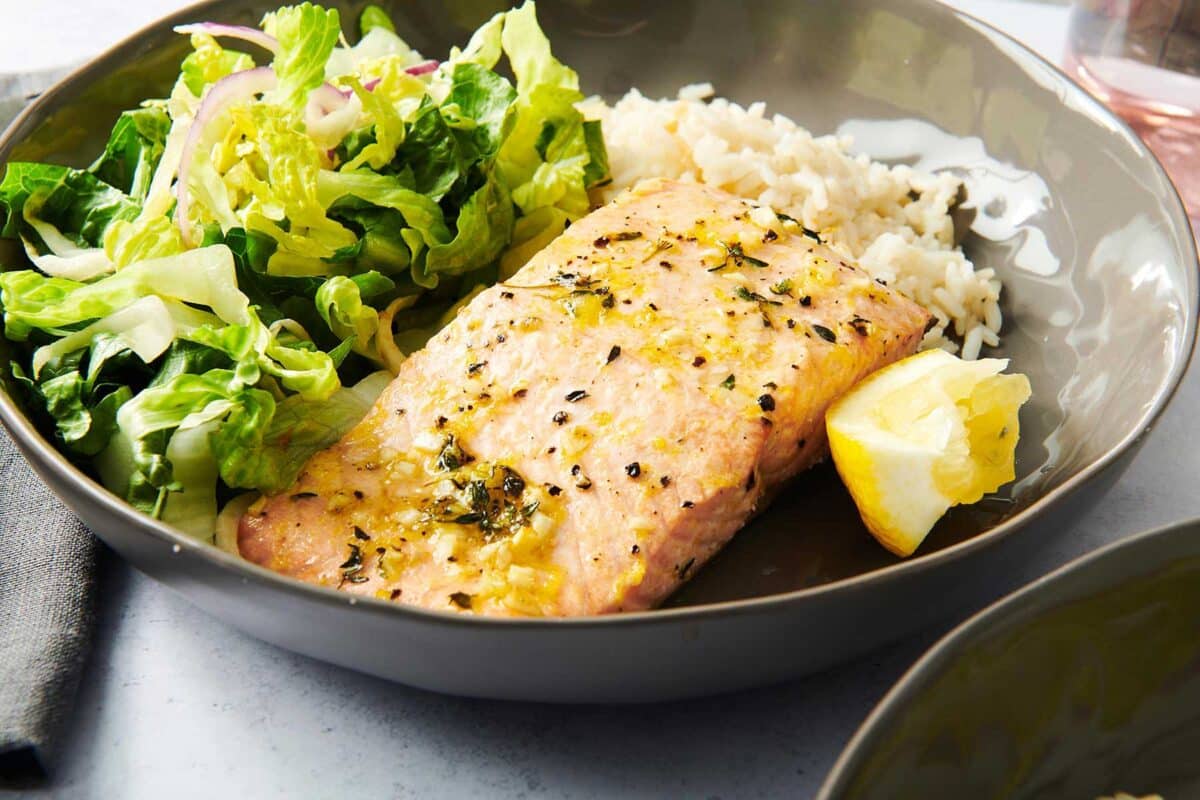
Baking salmon shouldn’t feel stressful, but for a lot of people, it does. One minute it’s underdone, the next it’s dry and chalky, and somehow you missed the sweet spot in between.
This is the method I use to bake salmon without drying it out, so it stays moist, flavorful, and cooked exactly the way you like it — whether that’s just barely opaque in the center or fully flaky. It’s simple, flexible, and reliable enough for a regular weeknight dinner, which is exactly when most of us are making salmon anyway.
This simple olive oil, garlic, and herb marinade adds flavor, but more importantly, it helps protect the salmon from becoming dry in the oven.
By signing up, you agree to our Privacy Policy.
What's In This Post?
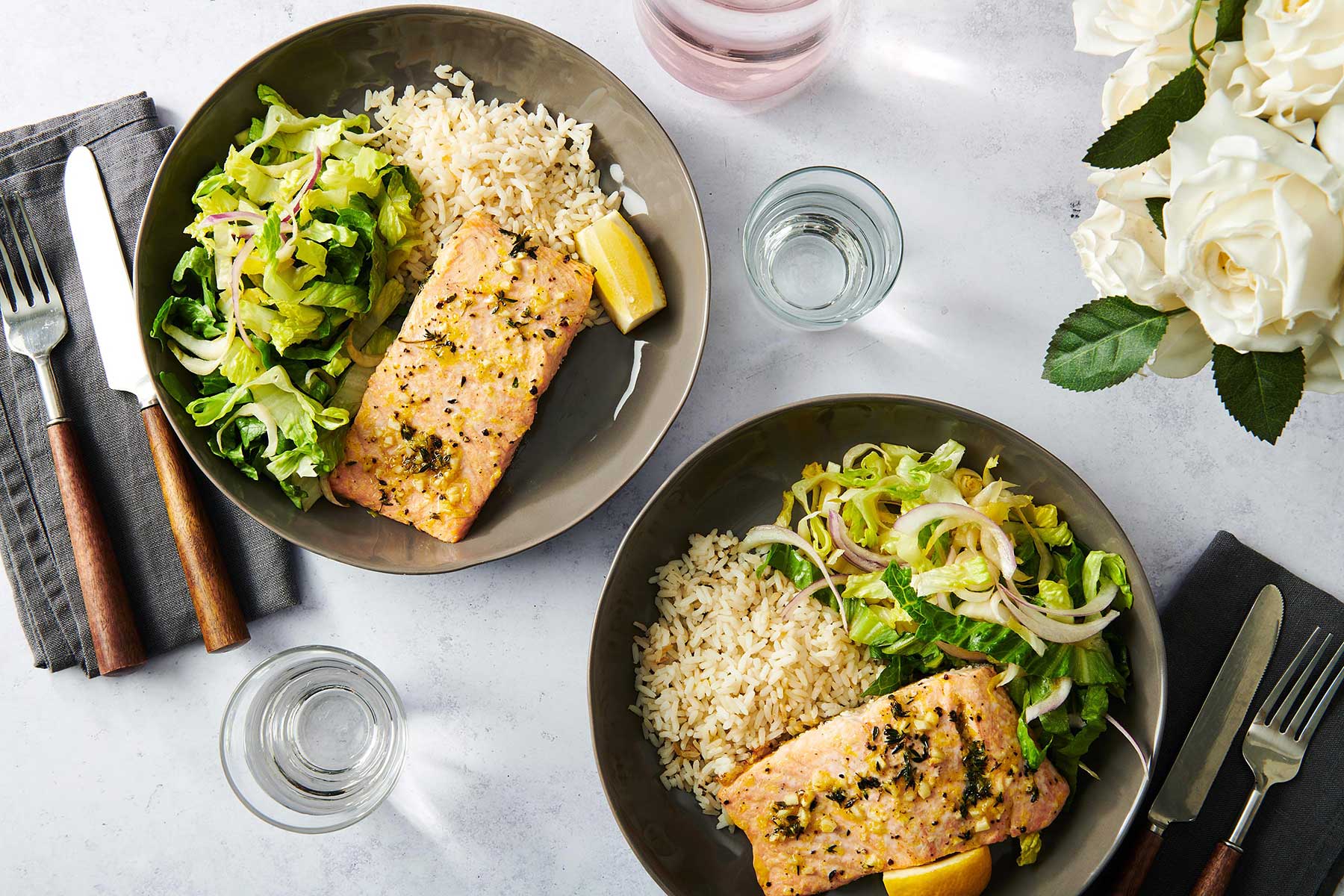
A Quick Salmon Dinner

An easy, baked (5-ingredient!) salmon dinner is a much-loved part of our regular dinner roster. This recipe just requires a 15-minute marinating time, enough to season the salmon and add some moisture to ensure it doesn’t dry out.
Salmon filets take just about 10 to 12 minutes to bake. Plus, once the dish is in the oven, you have some hands-off time to make a salad and set the table.
The Best Temperature to Bake Salmon
If you want salmon that stays moist and doesn’t dry out, bake it at 400°F.
This temperature is hot enough to lightly brown the outside while keeping the inside tender, and it works well for most 1-inch-thick fillets. From there, cooking time depends on thickness and how done you like your salmon (see the chart below).
How Long to Bake Salmon
Cooking time depends as much on the thickness of the fish as the size of the piece. Larger pieces will take more time, as will thicker fillets. Therefore, small or thinner fish filets will cook faster. Some people prefer the salmon on the medium-rare side, with a dark pink center. Others prefer it to be cooked all the way through, so the fish turns opaque and flaky. Start checking at the earlier side of the cooking range if you like your fish on the undercooked side, and on the further side if you like your fish cooked completely.
Use this chart to dial in doneness based on oven temperature and thickness.
| Temperature | Cooking Time |
|---|---|
| 350°F | 14 to 16 minutes |
| 375°F | 12 to 16 minutes |
| 400°F | 10 to 13 minutes |
| 425°F | 9 to 11 minutes |
| 450°F | 8 to 10 minutes |
All times are for 1-inch-thick, 6–8 ounce salmon fillets.
Ingredients
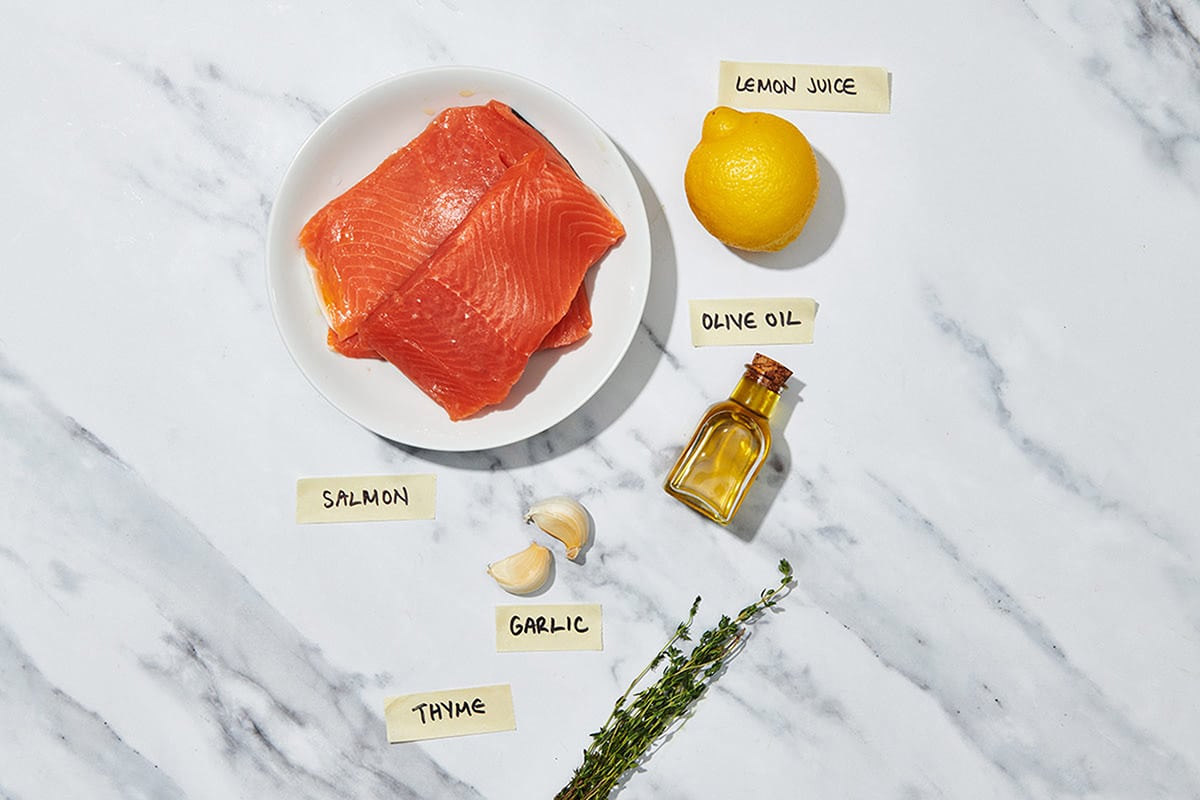
- Salmon fillets – Look above for tips about how long to cook your salmon so that it’s perfectly suited to your taste. (I personally love it medium to medium-rare.)
- Olive oil – The olive oil-based marinade for this fish ensures that it doesn’t dry out when baking.
- Garlic – Mince the garlic finely to add to the marinade.
- Herbs – I suggest oregano or thyme for this recipe, but you can use whatever fresh herbs you have on hand. And while fresh herbs really add wonderful flavor to the fish, you can also use dried if that’s what’s available to you.
- Lemon – Juice goes in the marinade, and wedges are for serving.
How to Make Baked Salmon
- Prep your materials: Preheat the oven to 400°F. Oil or spray a baking dish with nonstick spray.
- Make the marinade: In a shallow bowl, combine the olive oil, garlic, oregano or thyme, lemon zest and juice, salt, and pepper.
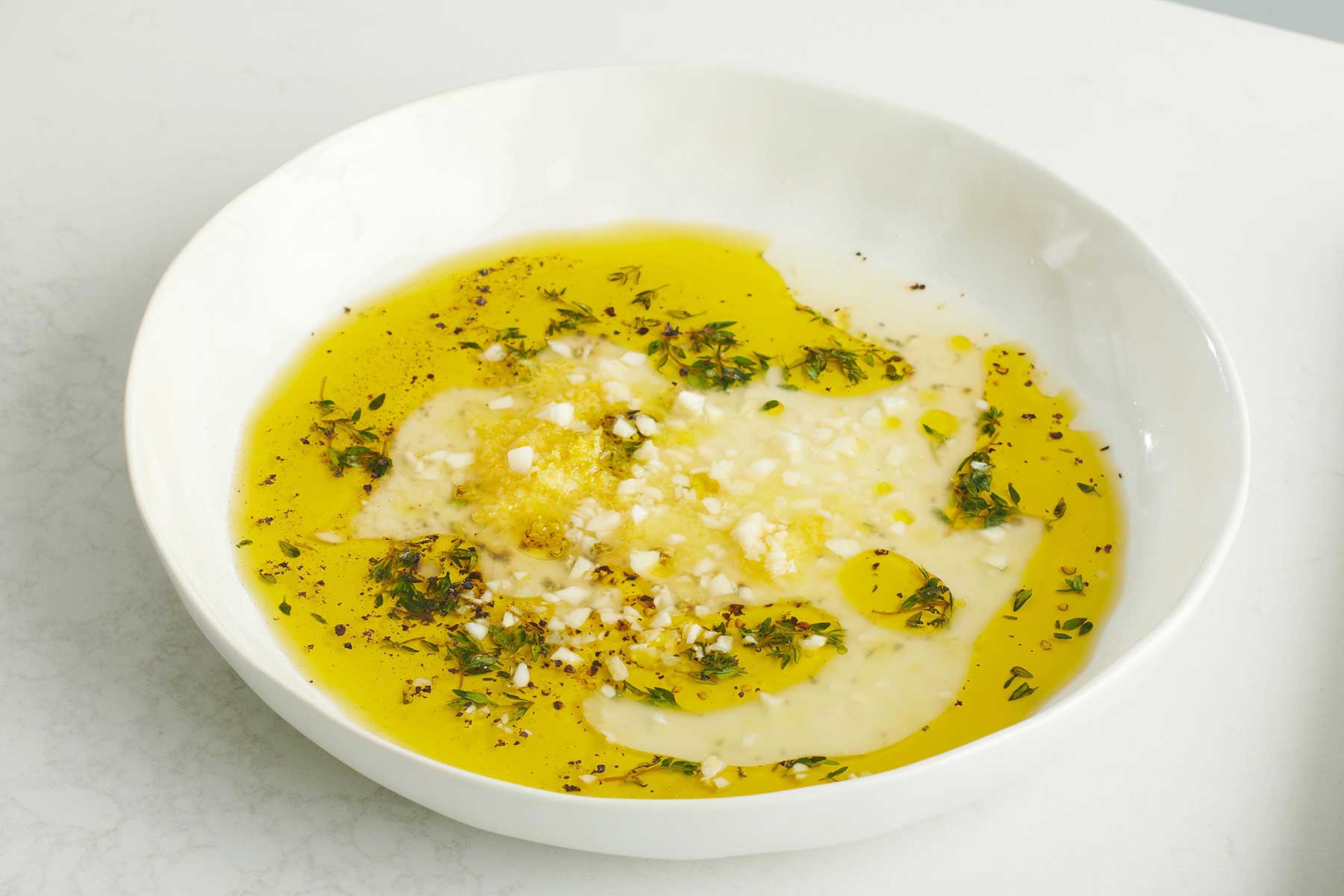
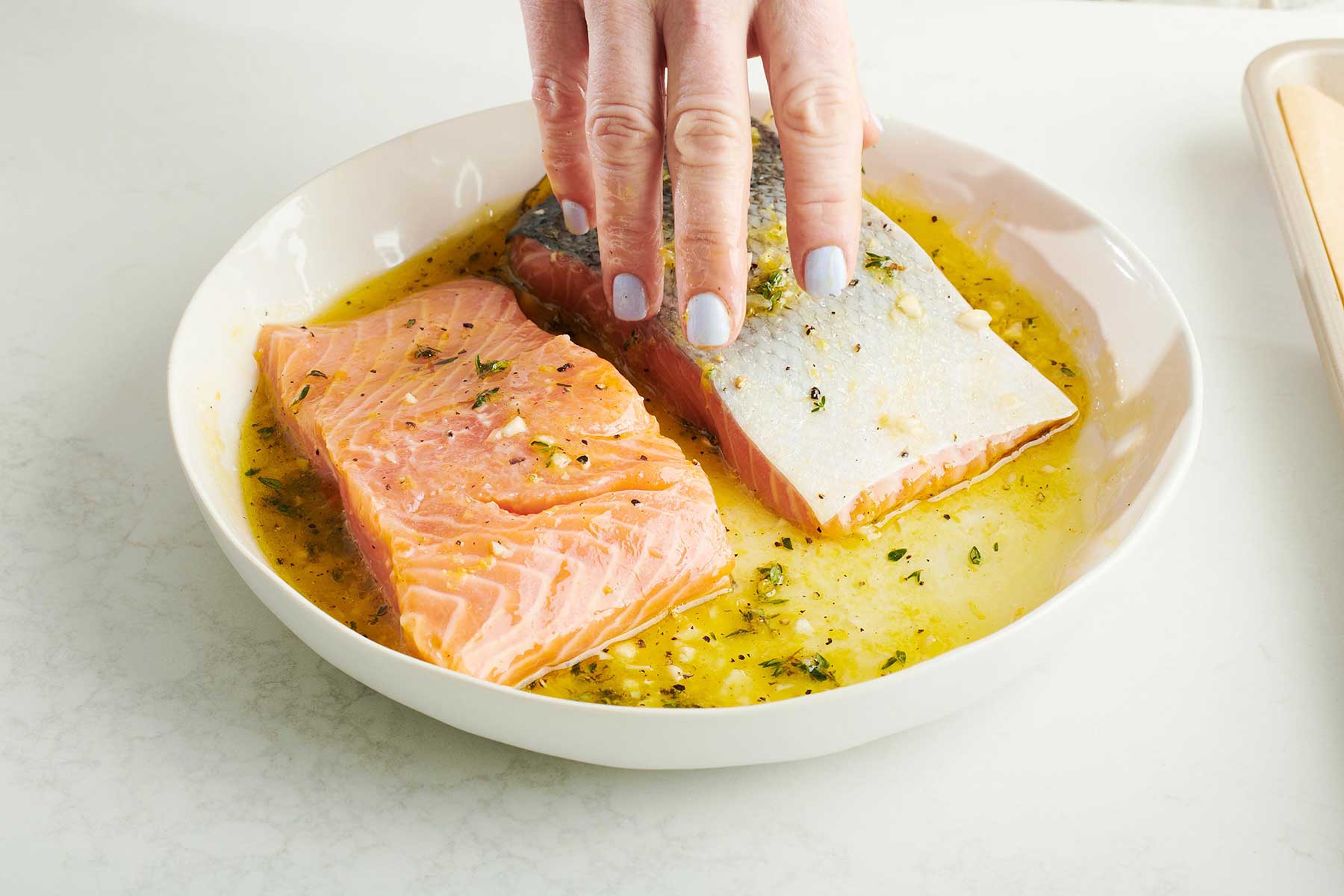
- Marinate the salmon: Roll the salmon filets in the olive oil mixture and place them in the pan, skin side down, if there is skin on the fish. Pour the remaining marinade over the fish in the pan. Let sit at room temperature for 15 minutes, if possible.
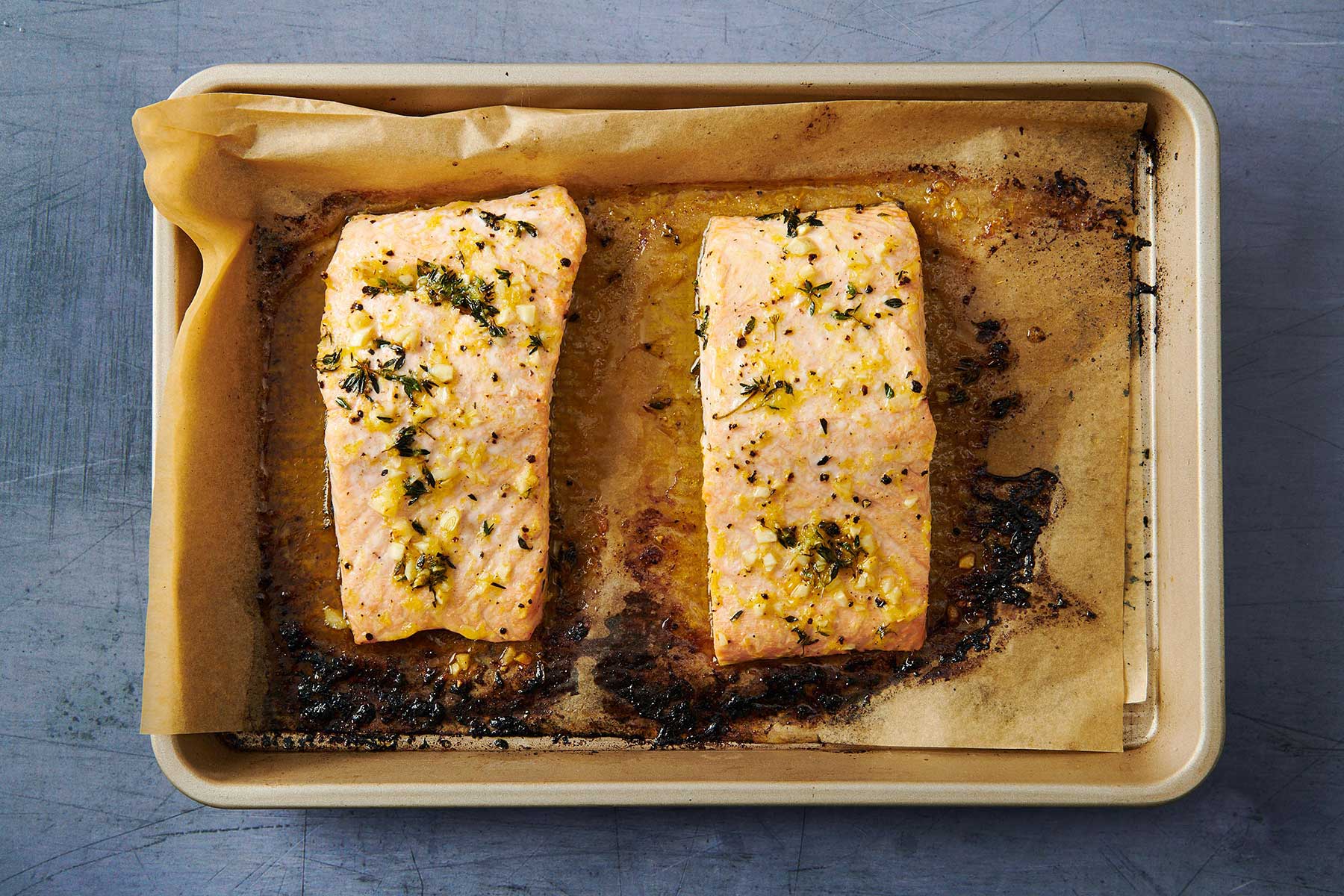
- Bake: Bake the salmon for 10 to 13 minutes, until cooked through (or to your liking). If you prefer a lightly-browned top, you can broil the fish for an additional minute or two.
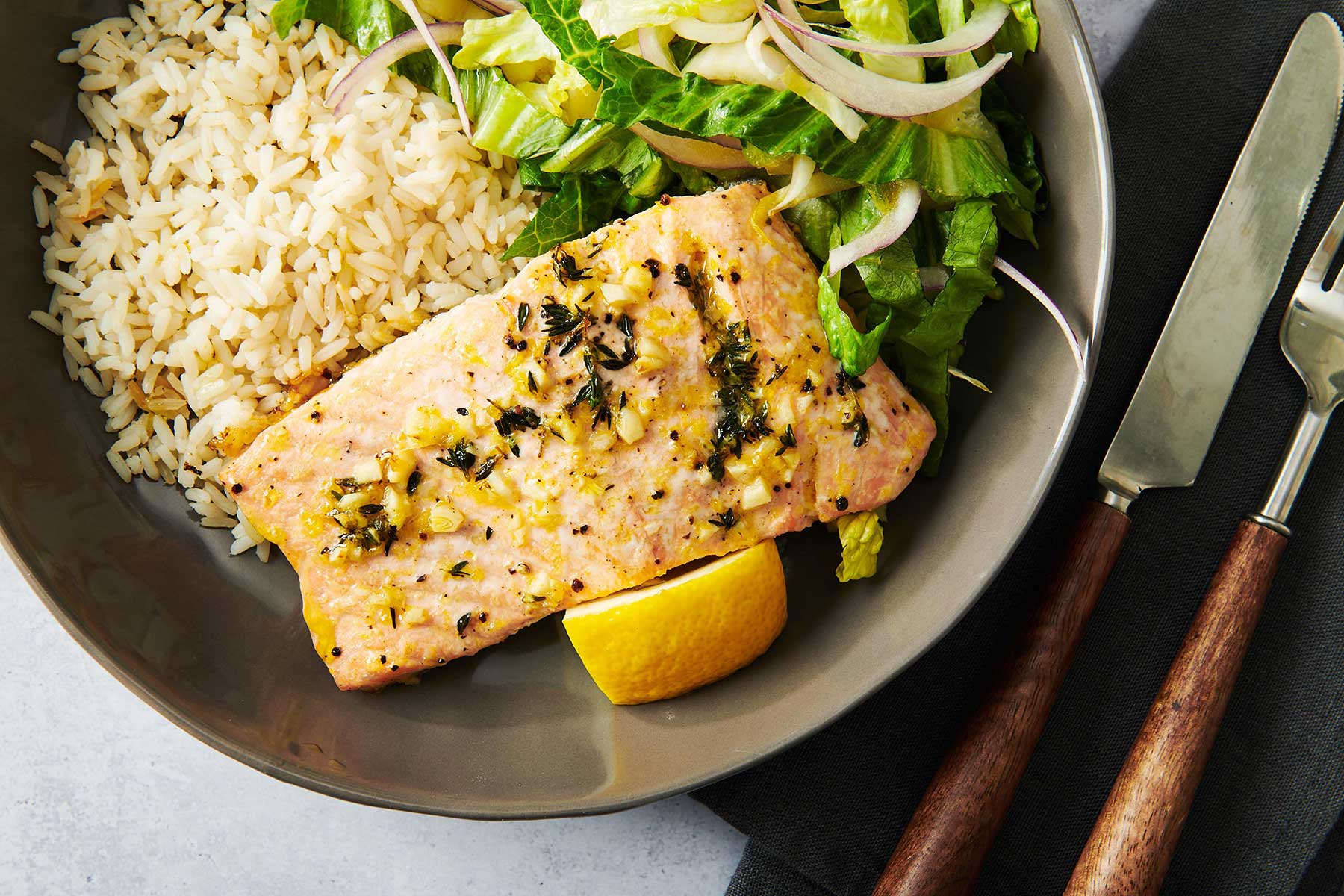
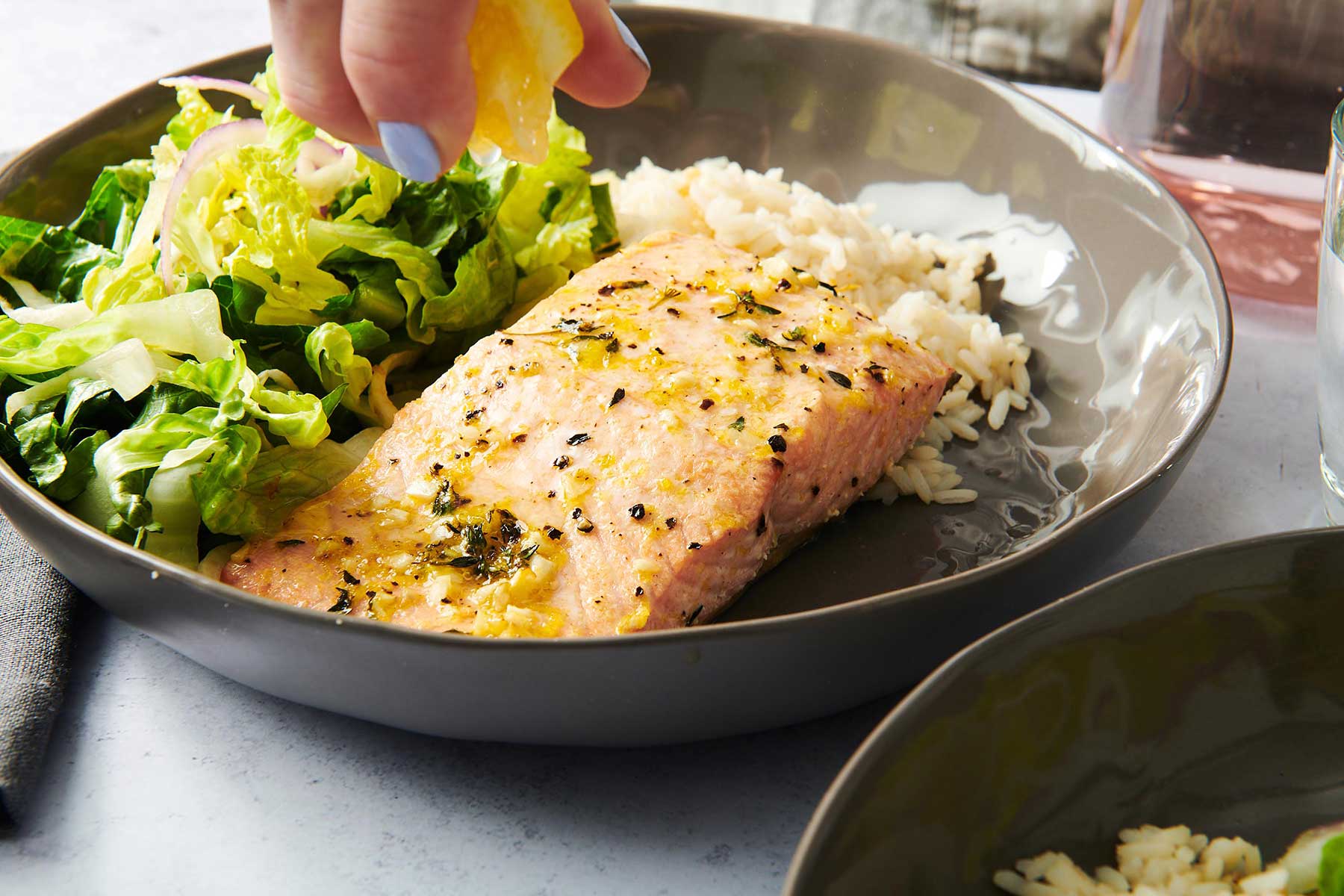
- Serve: Serve the fish with lemon wedges, garnished with herbs if desired.
Tips
- If you’re cooking salmon for more people, get a bigger pan! You can cook more than 2 pieces of fish at a time as long as you increase the size of the pan. Make sure you leave at least an inch between the pieces; crowding the salmon will slow down the cooking process significantly.
- If you are using a convection oven, you may need to reduce the cooking time by about 30 percent.
- Remember that the salmon will continue to cook a bit after you remove it from the oven, so take it out a little bit before it is done to your liking.
- Try another marinade, such as Ginger, Mint, and Lime Marinade or Spicy Sesame Marinade.
FAQs
Salmon is done but still moist when it flakes easily at the edges, and the center is just turning opaque, with a slightly darker pink middle. If you use an instant-read thermometer, aim for about 135°F for medium-rare or 140°F if you prefer it more cooked; the fish will continue to cook slightly as it rests.
Fully cooked salmon is opaque throughout and flakes easily with a fork. Medium-rare, on the other hand, is flaky on the outside with a bit of dark pink in the middle.
The FDA recommends a safe internal temperature of 145°F for fish and shellfish, but if you are using fresh, high-quality fish, you can cook it to medium-rare. 135°F is the internal temperature for medium-rare. If you want fully cooked, take the salmon from the oven when it reaches an internal temperature of 140°F, and as it rests, the temperature will climb to 145°F.
The best temperature to bake salmon without drying it out is 400°F. This allows the outside to cook and lightly brown while keeping the inside tender. Lower temperatures can dry the fish out before it’s fully cooked, and higher temperatures increase the risk of overcooking.
I prefer baking salmon uncovered. Leaving it uncovered helps the outside firm up slightly and gives you better control over doneness. As long as the salmon is brushed with oil or marinade and not overcooked, it will stay moist without being covered.
Yes — salmon can overcook very quickly. Just a minute or two too long can turn it dry and chalky. This is why it’s important to keep an eye on the fish toward the end of cooking and remove it from the oven just before it reaches your desired doneness.
You can reheat baked salmon without drying it out by doing it gently. Reheat it in a low oven (about 275°F), covered loosely with foil, until just warmed through. Adding a drizzle of olive oil or a squeeze of lemon helps restore moisture.
Yes, marinating salmon helps keep it from drying out by adding fat and flavor to the surface of the fish. Even a short marinade with olive oil, herbs, and citrus can help protect the salmon during baking and improve both texture and taste.
What to Serve With Baked Salmon
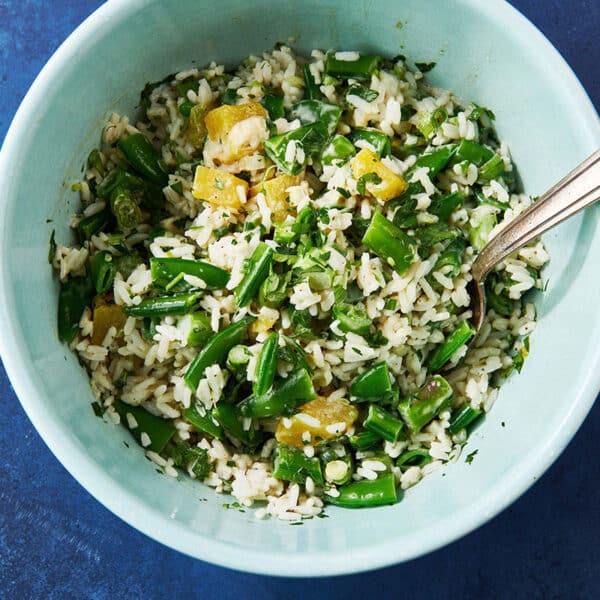
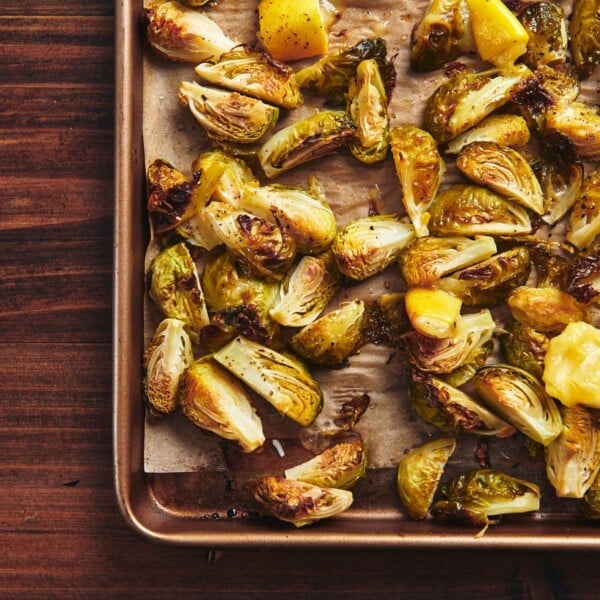
Simply baked salmon also gives you so much flexibility in what to choose for a side dish. You can go in any number of directions, in the spring, maybe some grilled asparagus, in the summer Cherry Tomato Antipasti Salad, in the fall Classic Greek Salad or Broccoli Salad Recipe, in the winter Cheesy au Gratin Potatoes.

More Oven-Baked Salmon Recipes
- Honey Ginger Salmon
- Sheet Pan Salmon and Broccoli Rabe
- Salmon, Potato, and Broccoli Sheet Pan Supper
- Dedie’s Herbed Salmon
Pin this now to find it later
Pin It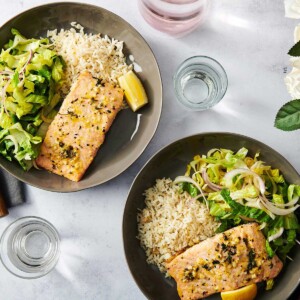
Baked Salmon
Ingredients
- 2 (6- to 8-ounce) salmon filets
- 2 tablespoons olive oil
- 1 teaspoon minced garlic
- 1 teaspoon chopped fresh oregano or thyme (or 1/2 teaspoon dried)
- Zest and juice of 1 lemon
- Kosher salt and freshly ground black pepper (to taste)
- Lemon wedges (to serve)
- Fresh herb sprigs (for garnish; optional)
Instructions
- Preheat the oven to 400°F. Oil or spray a baking dish with nonstick spray. In a shallow bowl, combine the olive oil, garlic, oregano or thyme, lemon zest and juice, salt, and pepper. Roll the salmon filets in the olive oil mixture and place them in the pan, skin side down, if there is skin on the fish. Pour the remaining marinade over the fish in the pan. Let sit at room temperature for 15 minutes, if possible.
- Bake the salmon for 10 to 13 minutes, until cooked through or to your liking. If you prefer a lightly browned top, you can broil the fish for an additional minute or two.
- Serve the fish with the lemon wedges, garnished with the herbs if desired.
Notes
- If you’re cooking salmon for more people, get a bigger pan! You can cook more than 2 pieces of fish at a time as long as you increase the size of the pan. Make sure you leave at least an inch between the pieces; crowding the salmon will slow down the cooking process significantly.
- If you are using a convection oven, you may need to reduce the cooking time by about 30 percent.
- Remember that the salmon will continue to cook a bit after you remove it from the oven, so take it out a little bit before it is done to your liking.
- Try another marinade, such as Ginger, Mint, and Lime Marinade or Spicy Sesame Marinade.











Perfectly simple for a quick dinner. The lemon-garlic marinade was easy and flavorful.