Chopped Winter Salad

on Jan 08, 2026
This post may contain affiliate links. Please read our disclosure policy.
Winter salads can be just as exciting as summer ones — this chopped winter salad marries hearty, slightly bitter greens and roasted butternut squash with chickpeas, apples, and a bright dressing for crunch and flavor. It’s satisfying, nourishing, and perfect alongside roasted mains or on its own.
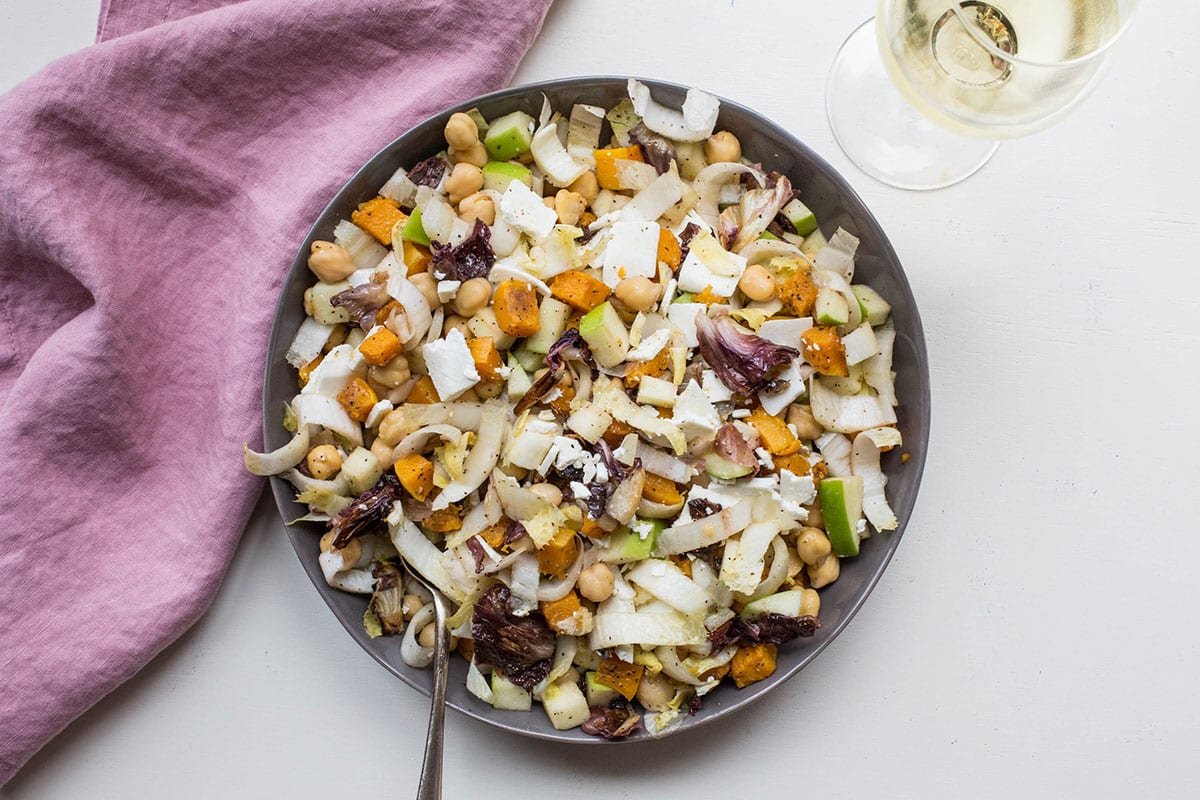
Just because it’s winter doesn’t mean salad has to be boring. This chopped winter salad combines hearty greens, seasonal veggies, crunchy nuts or seeds, and a bright vinaigrette that keeps every bite fresh and satisfying — a perfect partner for cozy dinners or easy lunches. You can add a handful of chopped nuts, such as walnuts or almonds, or perhaps pumpkin seeds or sunflower seeds for crunch.
In this salad, beautiful, sweet, orange butternut squash gets roasted with some slightly — but appealingly — bitter radicchio. The roasting process actually sweetens up the lettuce a bit, as well as the squash. When cooled, they are mixed with some assertive endive, tart apple, and earthy chickpeas.
You can choose between red wine and balsamic vinegar for the dressing. Either will amp up the tartness, and the balsamic will add a bit of sweetness as well.
By signing up, you agree to our Privacy Policy.
What's In This Post?
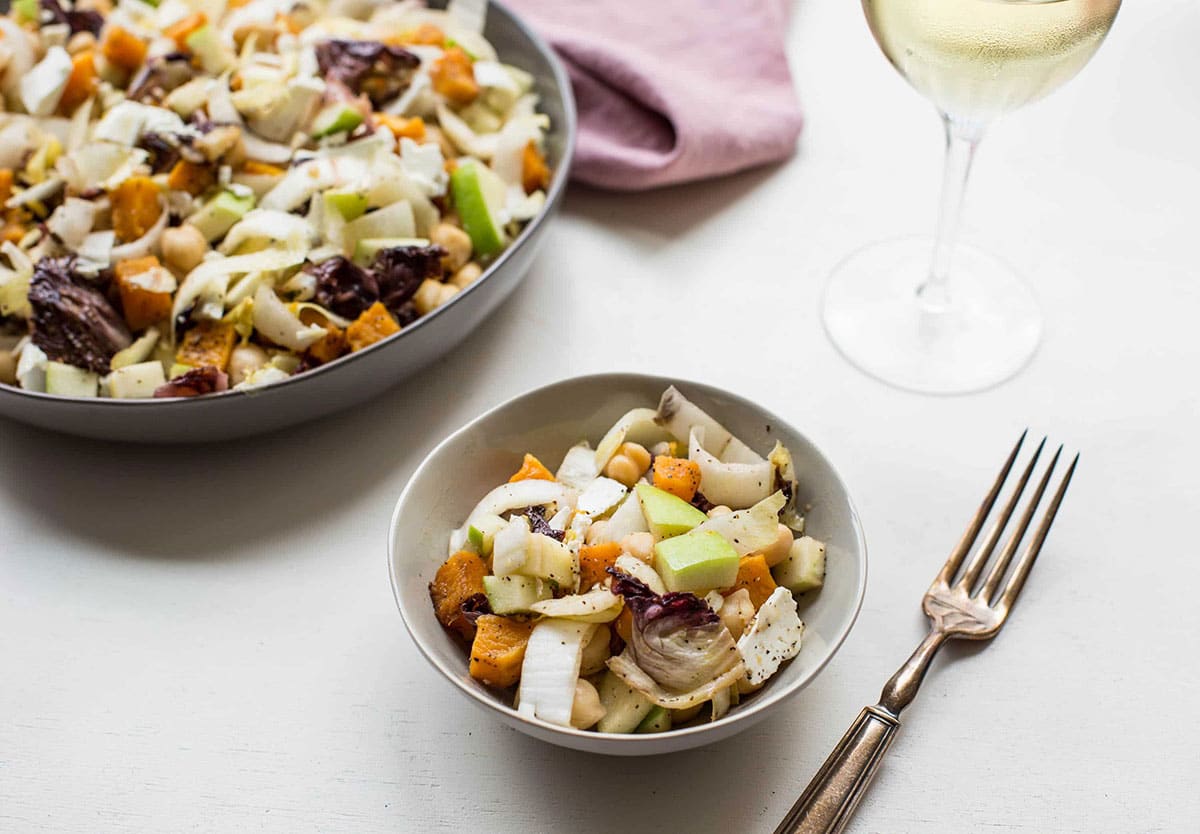
A Cold-Weather Salad That Makes a Statement

How often do we read articles about how meaningful it is to cook with the seasons? And how easy is that to do, say, April through October? But then winter arrives and tests our seasonal good intentions.
“O, wind, if winter comes, can spring be far behind?” Yeah, yeah, Shelley, you try and make a meal out of two rutabagas and a turnip. But hey, I’m not really as curmudgeonly about winter as that. I love cold-weather cooking, in fact. And I like a challenge.
Making a salad in the warm months is an exercise in greediness and narrowing down choices. Our bowls overfloweth. But daylight savings time arrives, and grabs us by the farmers’ market, and the pickings get slimmer. But then the creative juices start to flow, and we might think about including a cooked ingredient or two in a salad (here, butternut squash) and maybe some cold-weather fruit, like crunchy apples.
Ingredients
- Butternut squash
- Radicchio
- Balsamic vinegar or red wine vinegar – Either vinegar will work great.
- Endive
- Chickpeas – You can use canned chickpeas (drain them well!), or try this salad with roasted chickpeas.
- Green apple
- Ricotta Salata – An Italian cheese made from the whey of sheep’s milk. It has an ivory color, a lovely saltiness, and a firm, crumbly texture. If you can’t find it, a cup of crumbled feta would do you just fine. You could also use goat cheese, but sprinkle that over the top of the salad so it stays distinct and doesn’t mush into the rest of the salad.
How to Make Chopped Winter Salad
- Roast the squash: Toss the cubed butternut squash with olive oil, salt, and pepper on a rimmed baking sheet. Roast in a preheated 425°F oven until almost tender, about 15 minutes.
- Roast squash and radicchio: Add the radicchio to the pan, and toss with the butternut squash. Roast for 8 to 10 minutes longer, until the squash is tender but firm and the radicchio is wilted. Let cool to room temp.
- Make the dressing: In a large bowl, whisk the vinegar with 3 tablespoons of olive oil, salt, and pepper.
- Toss the salad and serve: Toss the squash and radicchio with the endive, chickpeas, apple, ricotta salata, and dressing. Adjust the seasonings as needed, then serve.
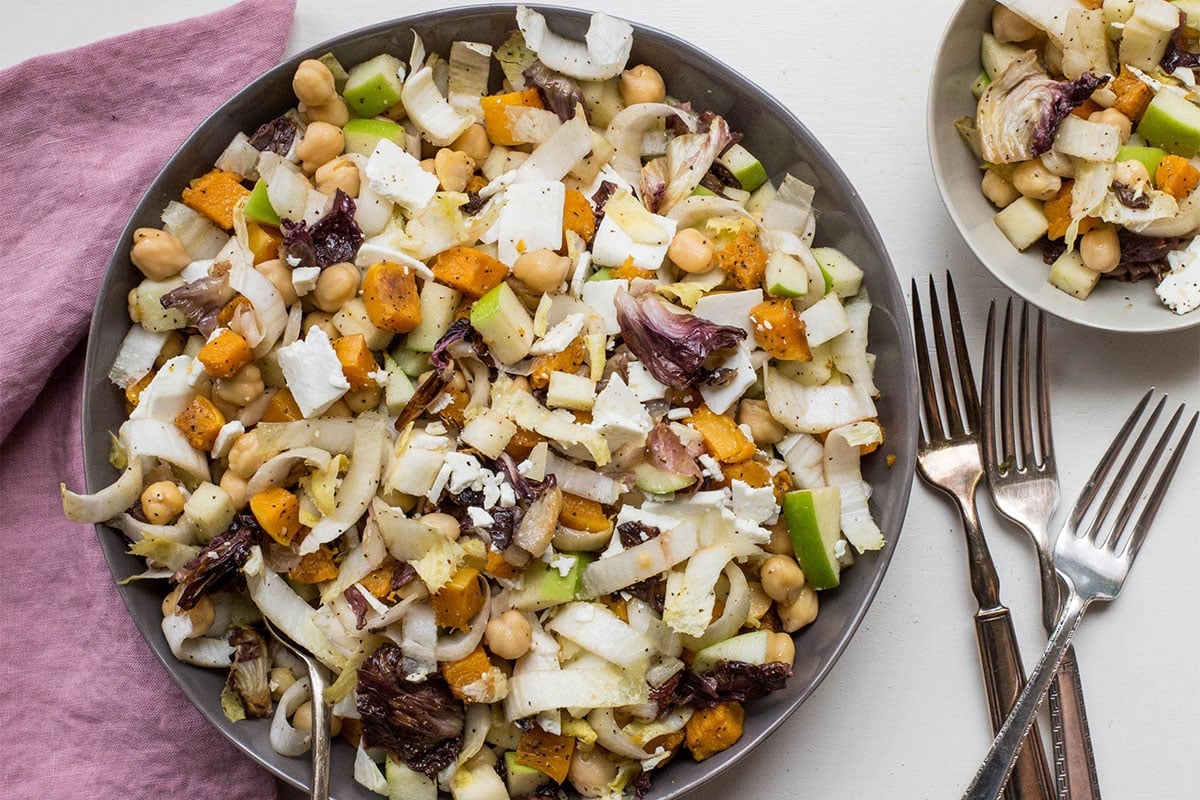
Seasonal Substitutions
Think of this salad as a formula, not a fixed list. If something isn’t great (or available) where you shop, swap within the same category and keep moving. Here’s an easy guide:
- Roasted Veggies (sweet):
Butternut squash → sweet potatoes, delicata squash, carrots, parsnips - Bitter Greens (roasted or raw):
Radicchio → escarole, frisée, chicory, kale - Crunchy Raw Veg or Fruit:
Apple → pear, fennel, celery, jicama - Protein / Hearty Add-In:
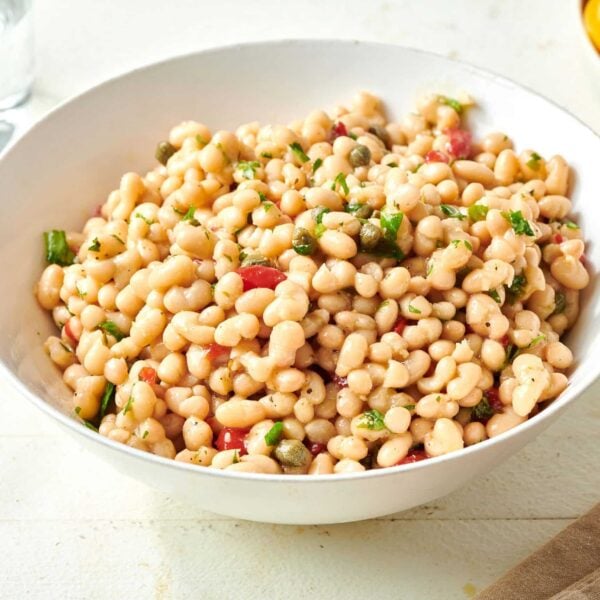
Chickpeas → white beans, lentils, roasted tofu - Cheese Finish:
Ricotta salata → feta, shaved Parmesan, goat cheese
As long as you’ve got something roasted, something crunchy, something bitter, and something bright, the salad will work. Winter salads don’t need to be rigid — they just need a little structure and a lot of confidence.
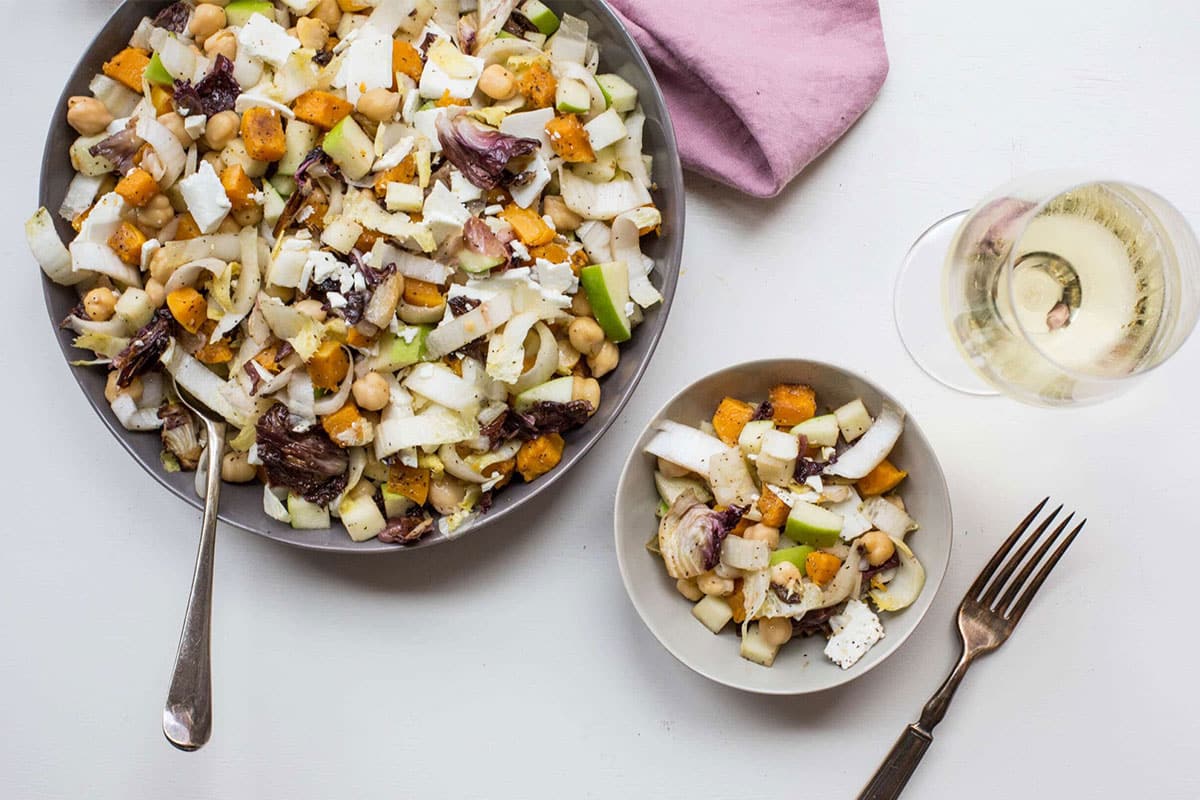
What to Serve With a Chopped Winter Salad
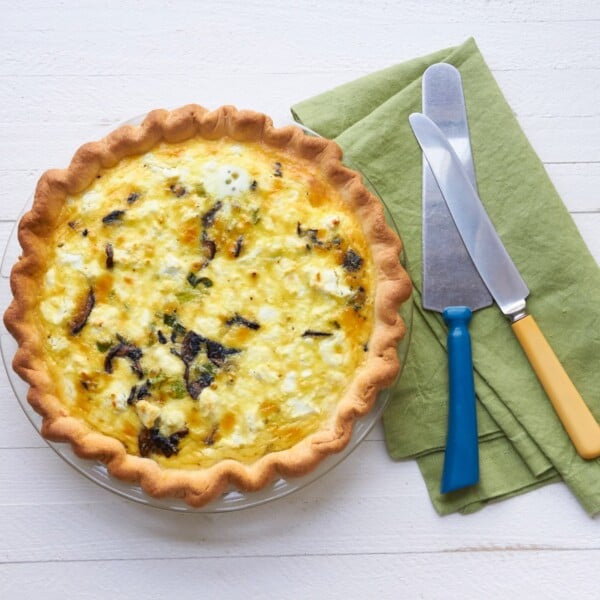
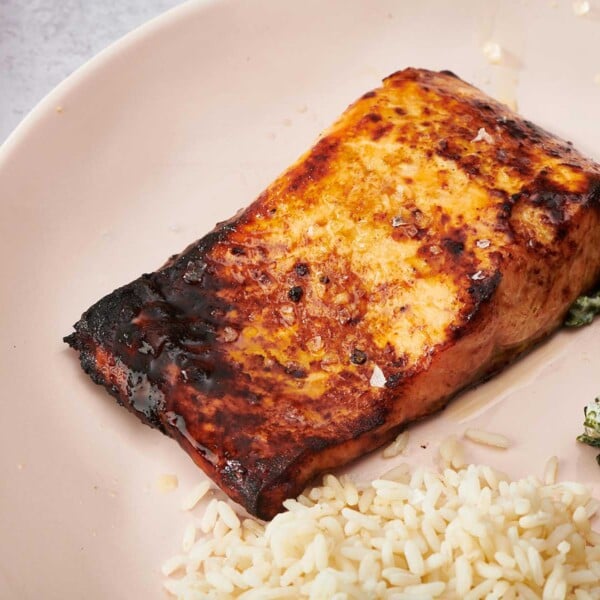
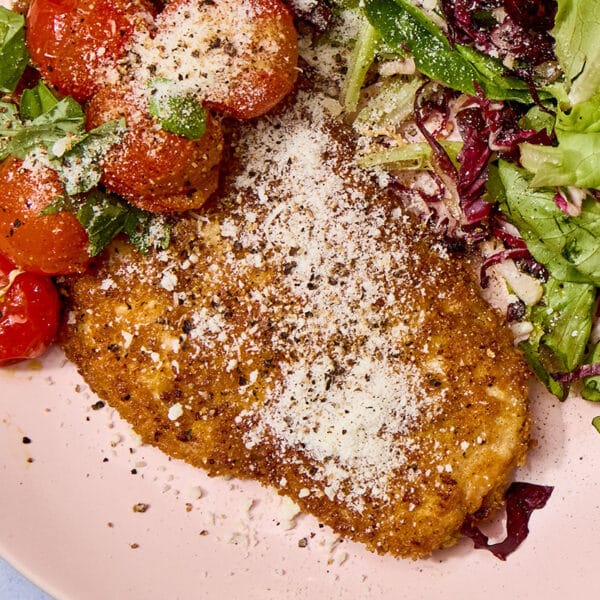
Pin this now to find it later
Pin It
Chopped Winter Salad
Ingredients
- 1 pound cubed, 3/4-inch butternut squash
- Kosher salt and freshly ground black pepper (to taste)
- 4 tablespoons olive oil (divided)
- 1 large head radicchio (quartered and cored; each quarter sliced in thirds crosswise)
- ¼ cup balsamic or red wine vinegar
- 2 large heads endive (sliced cross-wise into 1/2-inch slices)
- 1 (15.5-ounce can) chickpeas (drained and rinsed)
- 1 green apple (cut into 1/2-inch dice)
- 1 cup slivered ricotta salata
Instructions
- Preheat the oven to 425°F. Place the squash with 1 tablespoon of olive oil on a rimmed baking sheet, season with salt and pepper, and toss well. Spread out into a single layer and roast for 15 minutes, until almost tender.
- Remove from the oven, add the radicchio, toss again, and spread out again into a single layer. Roast for another 8 to 10 minutes until the squash is tender but still firm and the radicchio is wilted. Remove and let cool to room temperature.
- In a large bowl, whisk together the vinegar, remaining 3 tablespoons of olive oil, salt, and pepper.
- Add the cooled squash and radicchio, endive, chickpeas, apple, and ricotta salata to the dressing, and toss to combine. Taste and adjust seasonings as needed.










My mother was Picarde, from the northeast region of France, up near Belgium. We grew up with the glorious bitter and tart greens that many Europeans love so much: Belgian endive, escarole, sorrel… When I saw this recipe I knew I had to try it and was not disappointed. Actually I prepared it twice, as written, then roasted & added in Belgian endive & Brussel sprouts. But what I find more valuable than the recipes is the thoughtful commentary that introduces the recipe, in particular the discussion on trying to focus on seasonal produce. It’s a sublime exercise in consuming what’s available naturally & taking advantage of freshness, seasonality, saveur, & avoiding pushing the soil–whether in the ground or in bag–to produce more than it’s intended to. Be kind to Mother & she’ll take care of you.