What Is Salumi?

Updated Dec 26, 2025
This post may contain affiliate links. Please read our disclosure policy.
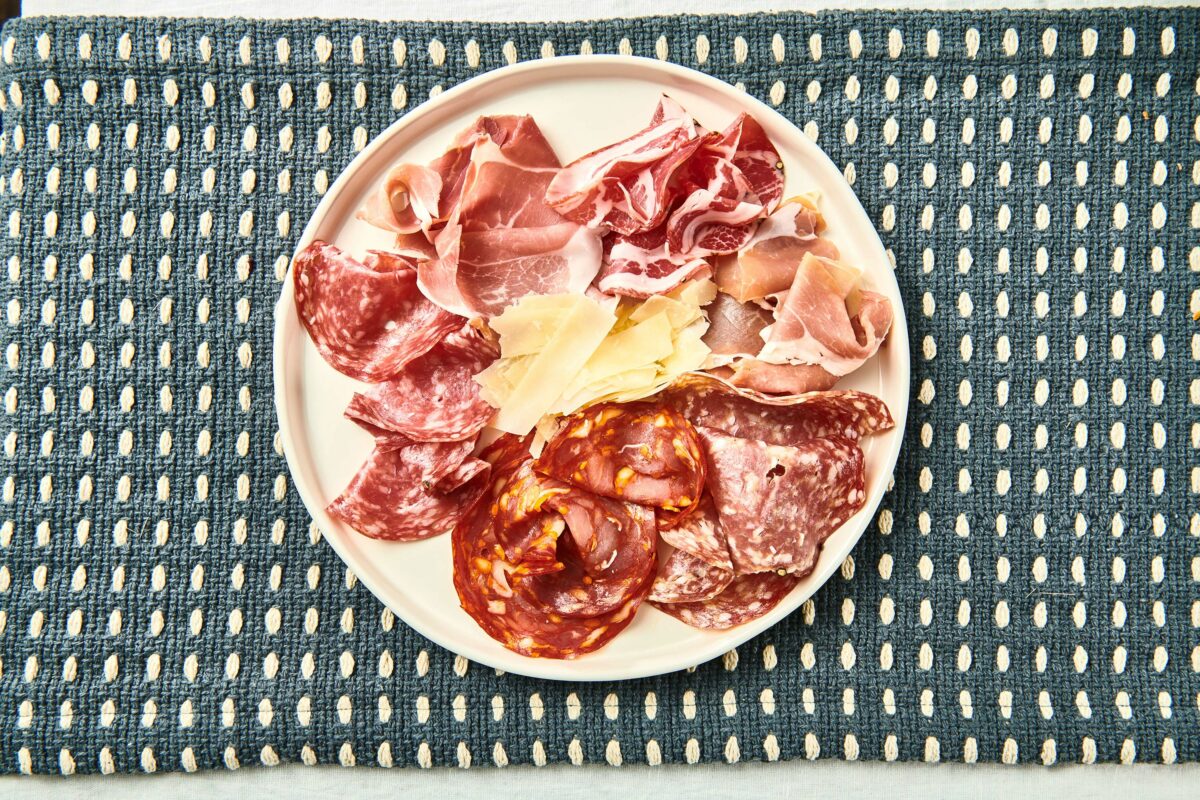
Salumi is the category of high-quality cured meats that include salami, prosciutto, and many other types, most pork-based or containing some amount of pork. Traditionalists limit the definition to cured meats, made throughout Italy, while others are using the term to describe meats that have been preserved in various ways — including cooked meats — produced in places all over the world.
Emilia-Romagna is the region of Italy most renowned for its salumi, prosciutto in particular, though cured meats are produced all throughout the country.
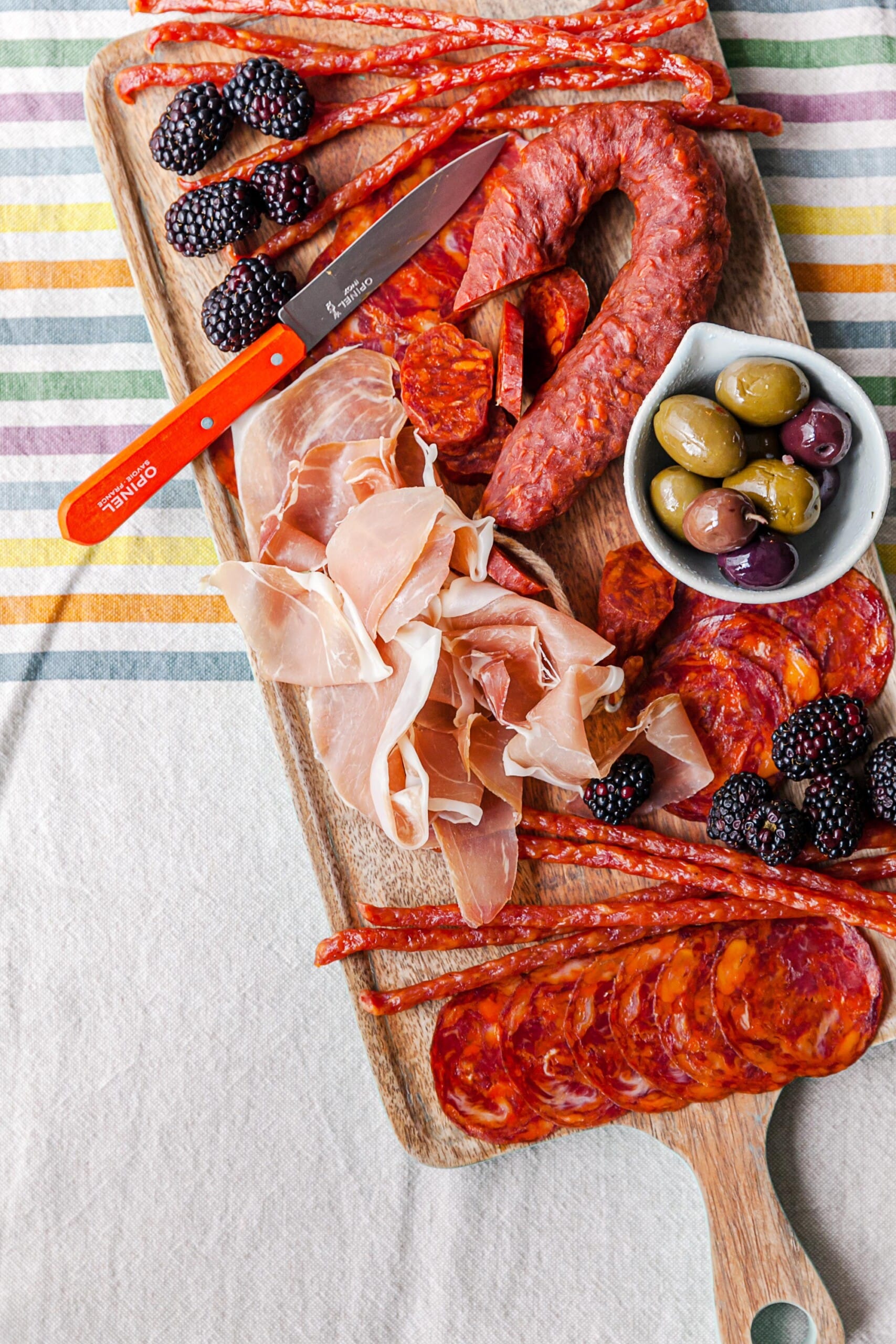
Salumi was born out of the necessity to preserve meat pre-refrigeration, and also use up all parts of the pig with no waste. Now, there are many manufacturers commercially producing packaged salumi, which are available at many supermarkets. Some good, readily available brands are Olli, Gusto, Coro, Creminelli, and Daniele. And of course there are artisanal salumi makers all of italy, the U.S, and the world.
By signing up, you agree to our Privacy Policy.
FAQs
Salu is the Italian word for all kinds of cured meats. Think of it as the umbrella term.
Under salumi, you’ll find salami, prosciutto, coppa, pancetta, mortadella, and a bunch of other tasty meats that have been salted, spiced, and aged.
Basically, if it’s an Italian cured meat, it’s salumi.
Salami is a type of salumi, just like a Fuji is a type of apple. Salami usually comes as a sausage (fermented and cured) that you slice. Not all salumi is salami, but all salami is salumi.
Charcuterie is the French cousin of salumi. It’s the French term for prepared meats—pâtés, terrines, cured sausages, and ham. Salumi is Italian, charcuterie is French, but both involve cured, preserved, or cooked meats meant for slicing and serving.
Absolutely not. Start simple: grab a slice of prosciutto for your sandwiches, some mortadella for a snack, or a few slices of salami on a cheese board. You’ll learn the fancy names as you go—and get a delicious porky education along the way.
In summary: Salumi = all the glorious Italian cured meats. Salami = a type of salumi. Charcuterie = the French version of the same idea. Now you can walk into any deli or restaurant with confidence and sound like you know exactly what you’re talking about.
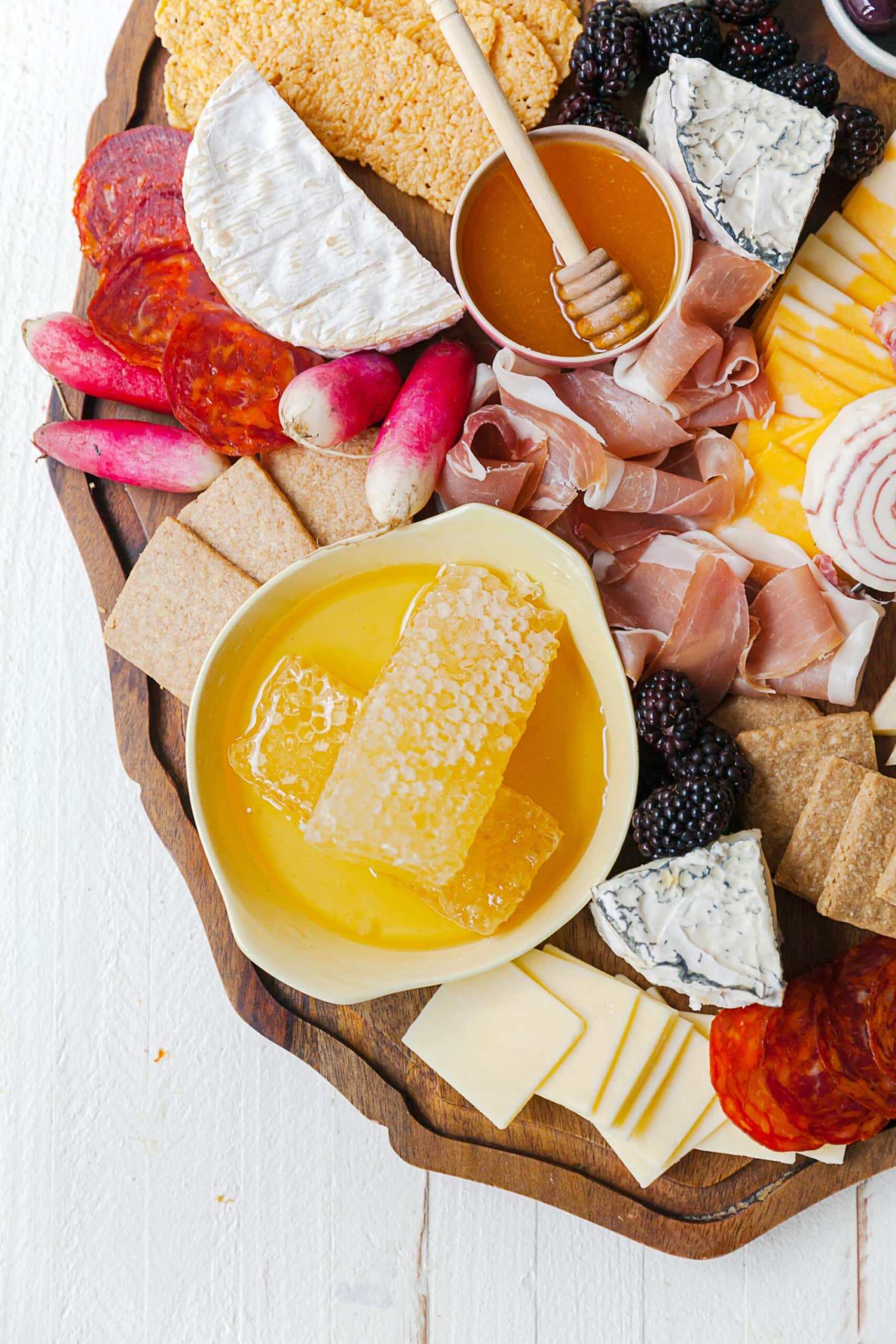
What is Salumi? A 101 on the basics of a variety of cured meats, from prosciutto to speck to guanciale to salami.
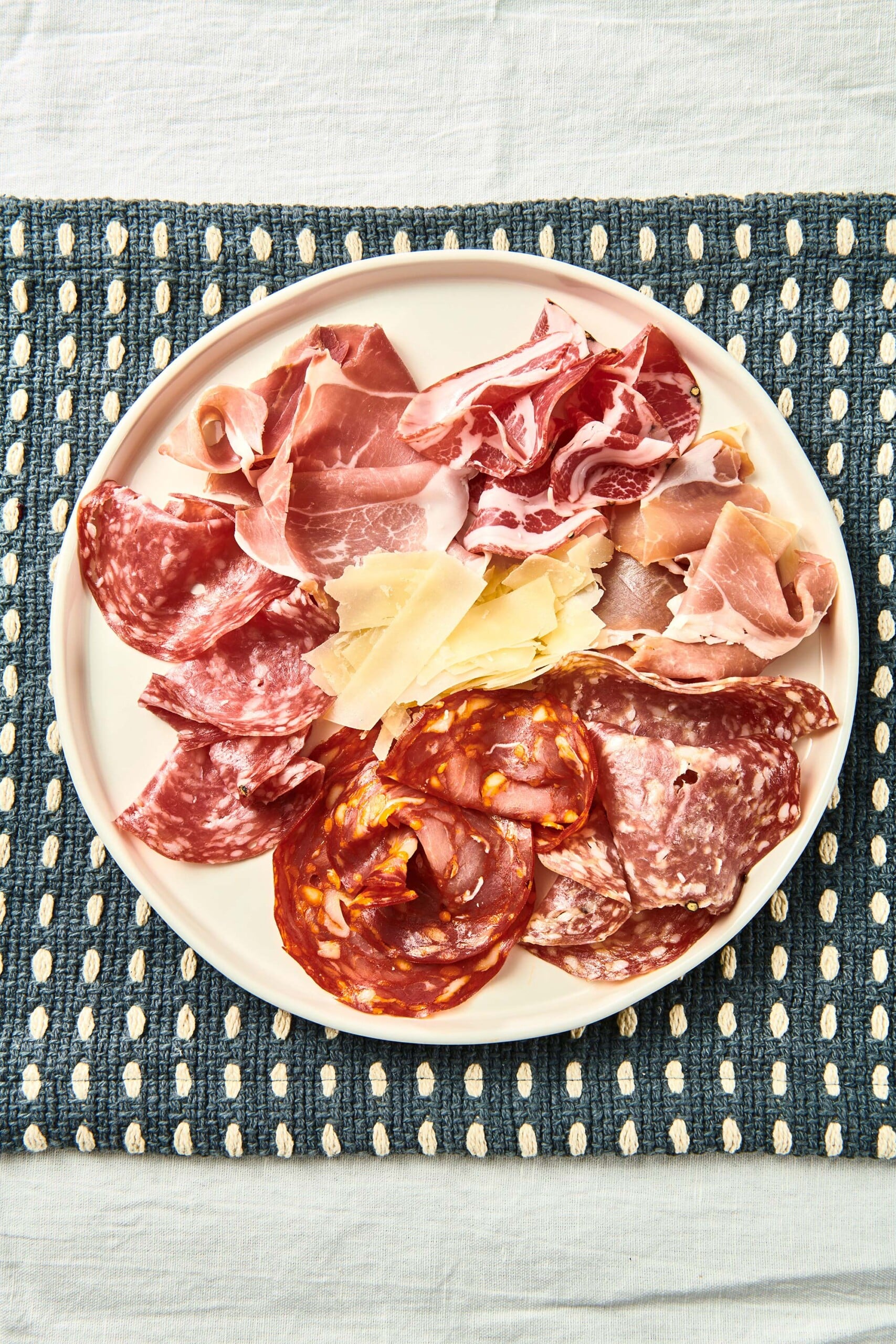
Quick tips for buying and serving salumi:
- Look for high-quality, minimally processed options.
- Serve sliced thin, and pair with bread, cheese, olives, or a little fruit for maximum flavor.
Types of Salumi
The world of salumi is vast. Here are but a few of the greatest hits of the category.
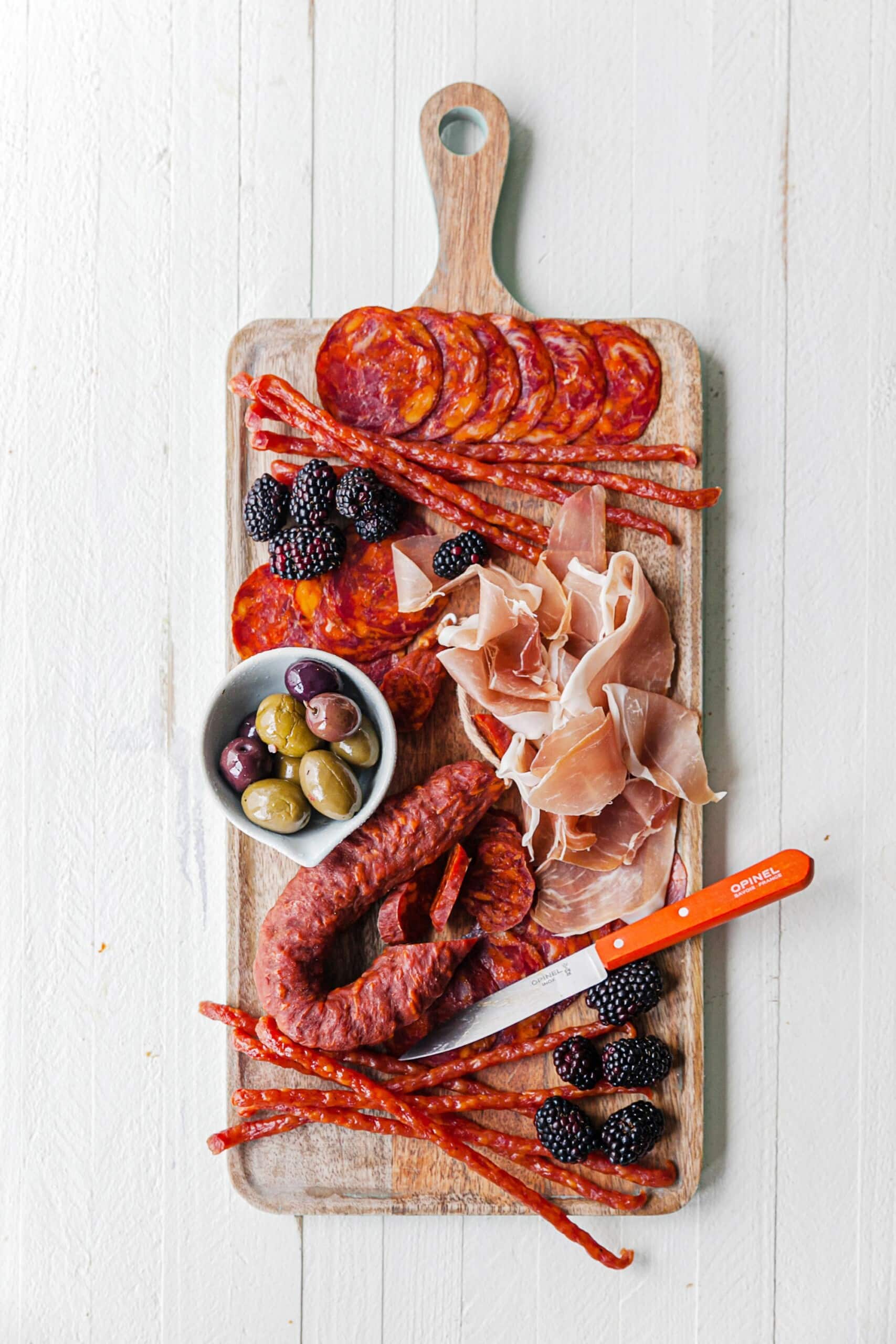
Salami
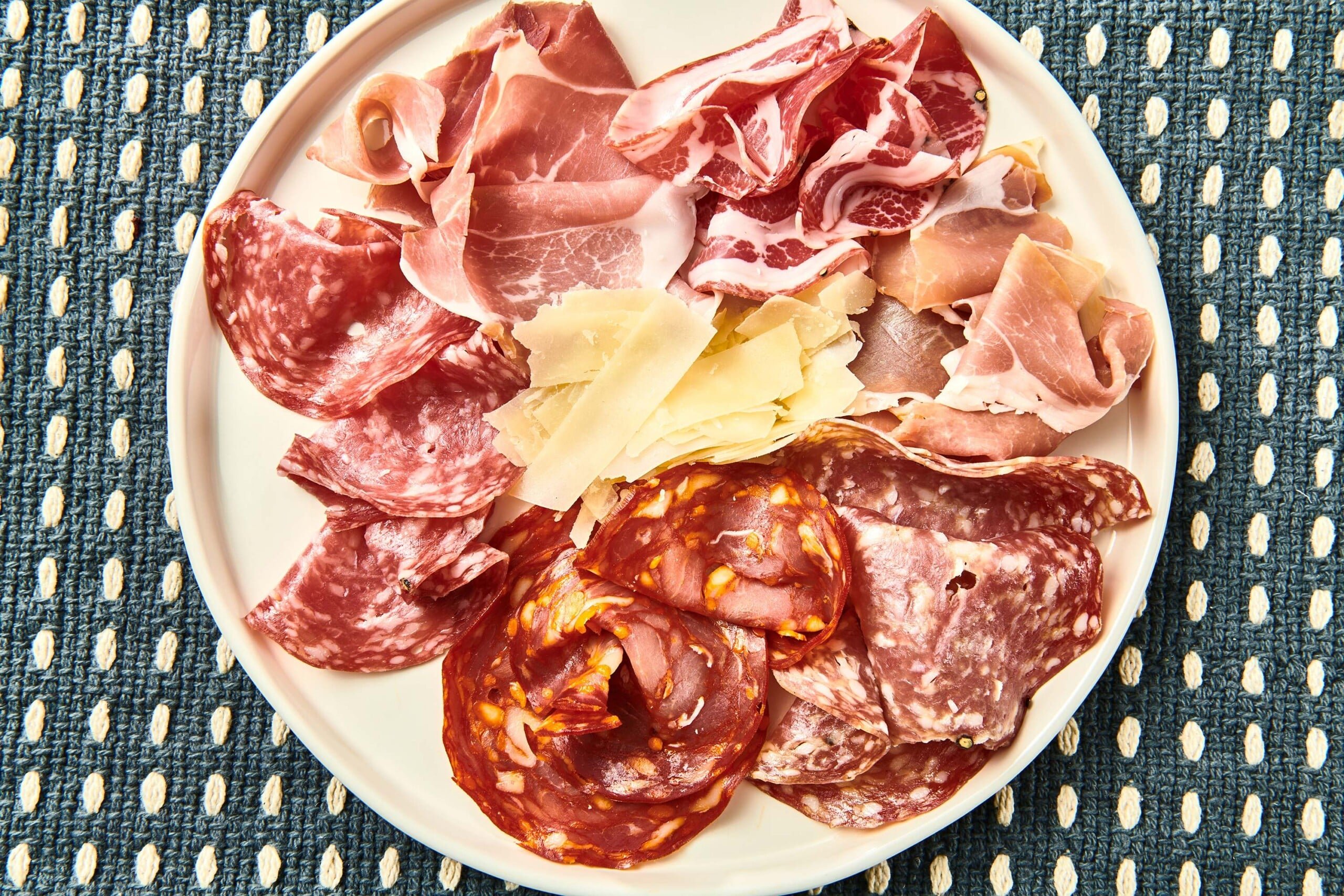
First, salami, the type of salumi that many of us are most familiar with. In summary, salami is a type of salumi, but not all salumi are salamis. In America, we are most familiar with firm-textured, dry-cured, sausage-style salami, sold either in a whole piece or sliced in packages or at the deli counter. But already we are in a huge category. There are so many types of salami available, and within each type, so many variations influenced by region.
Salamis are mostly made with chopped or ground meat that has been salted and seasoned, stuffed into a casing, and hung to cure and dry. There are also cooked salamis and soft cured salmis. In most cases ,you’ll want to remove the casing before eating, but you can check out a slice with casing to decide.
Sopressata
Sopressata is a dry-cured pork salami that is a perfect example of how all parts of the pig are put to good use in the making of salami. Its shape is long and slightly flattened. Sopressata usually gets some kick from chili peppers, black pepper, and other sliced. It can be sliced thick or thin.
Mortadella
Mortadella is a pink, smooth, lightly cured, and cooked salami made throughout Italy. It is made with different seasonings from place to place, and sometimes pistachio nuts, and is usually served in thin slices.
Nduja
‘Nduja (en-DFOO-ya) hails from the Calabrian region of Italy, and it’s distinctive in that it is a spreadable meat, hot with the peppers of the area. It’s often served with a knife to be spread on bread as an appetizer or a snack.
The second uber-category of salumi are the whole muscle options, such as prosciutto, speck, and guanciale. Most of these kinds of salumi are dry-cured with salt and various seasonings and wine. They are usually eaten thinly sliced and uncooked but sometimes cooked, often as an ingredient in other dishes. In the most perfect world you would purchase these kinds of salumi sliced to order at a store with high turnover. But, you can also find packages of salumi in the grocery store. Look in the fine cheese section or near the deli counter.
Prosciutto
The most familiar type of salumi to most people is probably prosciutto, which is a whole category unto itself. The most common type of prosciutto is salt-rubbed whole pork leg that has been cured for at least 400 days in cool, dark rooms. Prosciutto is usually sold in paper-thin slices and has a salty, funky flavor, a silky texture, and a delicate toothsomeness.
Speck
Italian or Italian-style speck is somewhat similar to prosciutto but with a bit more oomph. It usually has a bit more seasoning and smokiness and is a bit denser. It can be eaten as is or used in recipes.
Pancetta
Pancetta is essentially the bacon of Italy, a cured version of pork belly. It is often sold rolled into a cylinder, sometimes sliced, and sometimes diced. It can be eaten as is, but it is often sauteed and used in all kinds of dishes, from braises to pasta sauces to salads.
Guanciale
Guanciale is made from the jowls of the pig, seasoned with bay leaves, pepper, and juniper. It’s also usually sold in rolled format, again often sliced. Guanciale is most famously used in pasta sauces like carbonara and amatriciana.
Coppa
Coppa or capicola is from the top of the pig’s shoulder. It is seasoned differently throughout Italy, usually in specific regional ways. It’s usually quite flavorful – often made with wine and bright red, smooth in texture, fatty in the best way.
The best way to start getting to know the wide world of salumi? Taste them! If you have a good gourmet or Italian market near you, hit up the deli counter and ask to try some samples. And remember that you can buy a quarter of a pound of lots of different things.
How to Store Salumi
Keep salumi in the refrigerator, but bring it to cool room temperature (in the 60°F range) for the best eating experience.